





Rockstar
Administrators
-
Joined
-
Last visited
-
Currently
Viewing GTA 6 Pre-Orders Are Running 148% Ahead of Any Major Game in Six Years in category Articles: Gaming News
Everything posted by Rockstar
-

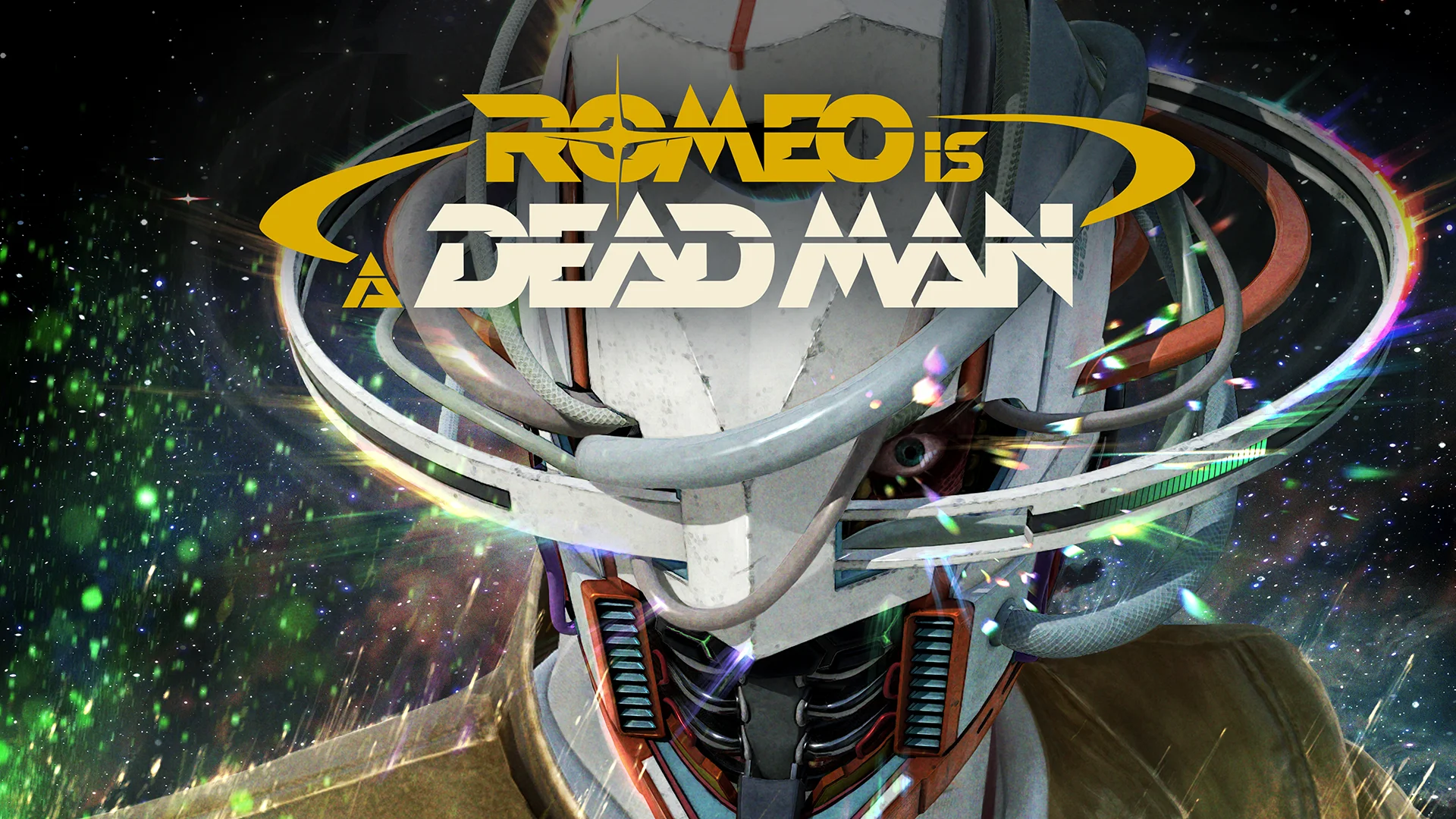 Fans of Suda51’s development studio, Grasshopper Manufacture, is known for games like No More Heroes and the Silver Case series. Up next on the studio’s docket is blood-soaked action game Romeo is a Dead Man. It promises a unique combination of ultra-violent science fiction and super sleek action gameplay, wrapped up in an original (and bonkers) story. This is the first Grasshopper Manufacture title to be published in-house; it will be released in February 2026. It is the studio’s first new IP in five years. Here is a description of the game, via Grasshopper Manufacture: Snatched from the brink of death by his donning of the rad mask “DeadGear”, FBI Space-Time special agent, Romeo Stargazer, sets out to hunt the most wanted fugitives in existence across the multiverse, armed with a heady arsenal of guns and close-combat weapons. And as if being stuck in a strange limbo between life and death as DeadMan and tasked with navigating a shattered space-time continuum isn’t enough, Romeo also has to contend with the sudden disappearance of his mysterious girlfriend, Juliet. Here are some new screenshots: “Now we’ve won our game of chicken against cough a certain twice-delayed 2026 release, we can reveal our cards and confirm we never intended to launch in May in the first place,” said Goichi ‘Suda51’ Suda, Executive Director/Scenario Writer/Producer at Grasshopper Manufacture, in a press release. “We’re warping space-time to put the finishing touches to Romeo is a Dead Man ahead of its launch next February.” Developed and published by Grasshopper Manufacture, Romeo is a Dead Man will be released for PC via Steam, PlayStation 5, and Xbox Series on February 11.
 -
Fans of Suda51’s development studio, Grasshopper Manufacture, is known for games like No More Heroes and the Silver Case series. Up next on the studio’s docket is blood-soaked action game Romeo is a Dead Man. It promises a unique combination of ultra-violent science fiction and super sleek action gameplay, wrapped up in an original (and bonkers) story. This is the first Grasshopper Manufacture title to be published in-house; it will be released in February 2026. It is the studio’s first new IP in five years. Here is a description of the game, via Grasshopper Manufacture: Snatched from the brink of death by his donning of the rad mask “DeadGear”, FBI Space-Time special agent, Romeo Stargazer, sets out to hunt the most wanted fugitives in existence across the multiverse, armed with a heady arsenal of guns and close-combat weapons. And as if being stuck in a strange limbo between life and death as DeadMan and tasked with navigating a shattered space-time continuum isn’t enough, Romeo also has to contend with the sudden disappearance of his mysterious girlfriend, Juliet. Here are some new screenshots: “Now we’ve won our game of chicken against cough a certain twice-delayed 2026 release, we can reveal our cards and confirm we never intended to launch in May in the first place,” said Goichi ‘Suda51’ Suda, Executive Director/Scenario Writer/Producer at Grasshopper Manufacture, in a press release. “We’re warping space-time to put the finishing touches to Romeo is a Dead Man ahead of its launch next February.” Developed and published by Grasshopper Manufacture, Romeo is a Dead Man will be released for PC via Steam, PlayStation 5, and Xbox Series on February 11. View full article
-
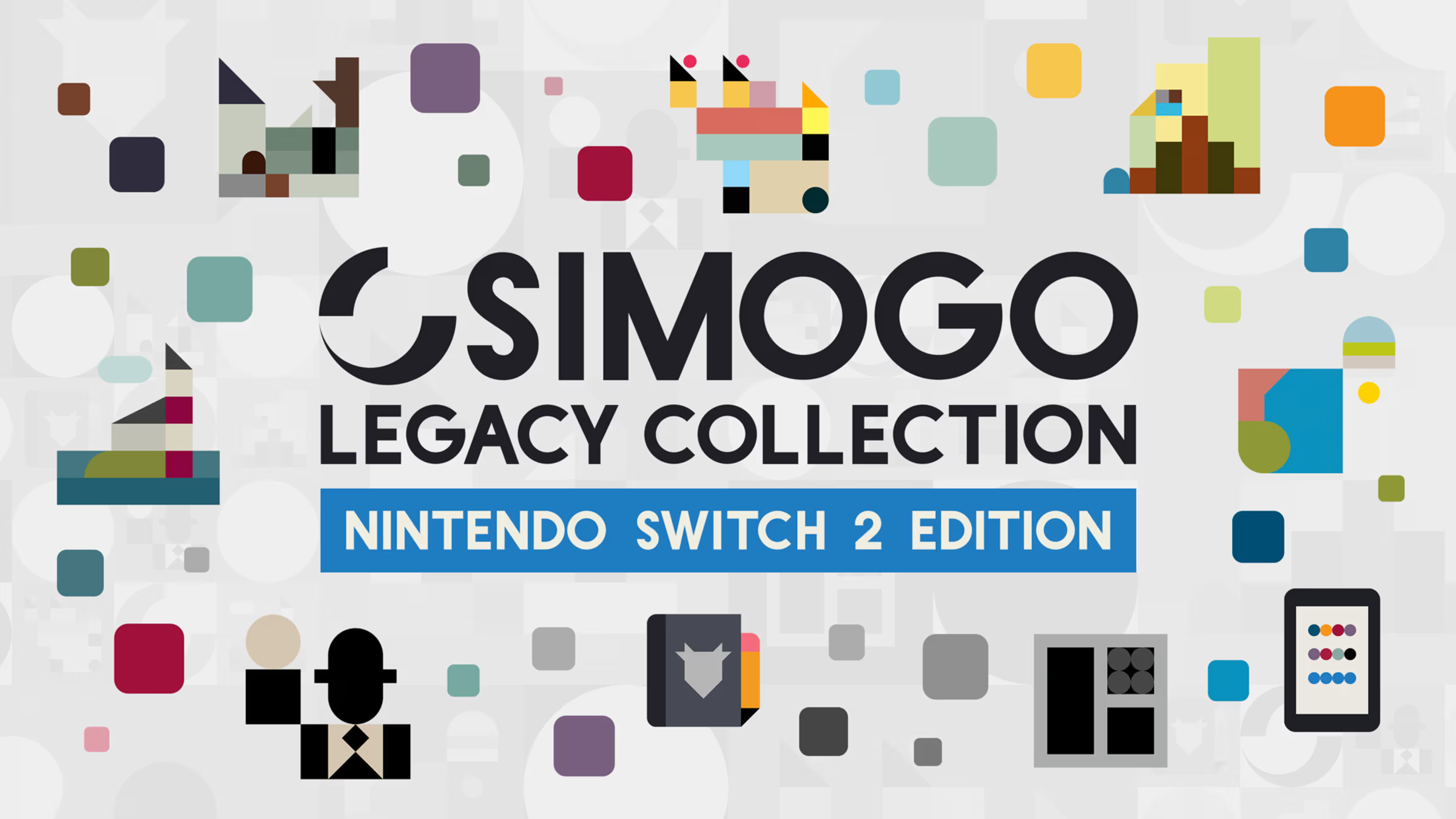 I had a moment of realisation while flipping my Switch 2 around in my hand and tapping at the screen in an effort to solve yet another clever-but-abstract puzzle. I realised that the Simogo Legacy Collection was one of the most unabashedly original sets of experiences I had encountered in a long time. The funny thing was that I had already played every game in this collection years before. It had been so long that the zenith of mobile gaming had slipped into the realm of half-forgotten memories. Simogo Games is perhaps better known for two stylised and mechanically unique titles from recent years: Sayonara Wild Hearts (2019) and Lorelei and the Laser Eyes (2024). It may surprise some that it is actually a storied studio with 15 years of history, recognised for fiercely original titles built for mobile devices. Those are the games that the Simogo Legacy Collection brings together. It features seven titles that both exemplify the early heyday of mobile games and manage to transcend that format. Captured on Nintendo Switch 2 (Docked) This is as lovingly curated a collection as you are likely to get, rivalling Digital Eclipse’s Gold Master Series for presentation and additional extras. The stylish menu is fashioned as a mobile phone screen, with tiles that take you to games, settings, and a wealth of bonus material. You are free to cycle between a vast collection of music as you wander the digital halls of this studio's archives. The games themselves range from fun time sinks to rich artistic endeavours. All of them need equal attention, so it is best to tackle them one by one. First up is Kosmo Spin, which is perhaps the most mobile-game-like experience here and a sign of a studio taking its first steps in the industry. It is a cute collectathon that plays with perspective by having you rotate the screen to guide a robot around a planetoid. You rescue robot buddies and avoid an enemy UFO that hurls projectiles and tries to hoover you up. Next is Bumpy Road, a deceptively simple exercise in hand-eye coordination. Your task is to guide a car across the screen, although the hook is that you move the vehicle by deforming the road underneath it with your finger. I had a lot of fun with this one, mostly failing. Beat Sneak Bandit is an odd but addictive combination of stealth and rhythm action. You control a thief who sneaks through Donkey Kong-style multi-level areas, and you can only move by tapping the screen to the beat. Year Walk is perhaps the developer's most beloved mobile title and much more of a purely artistic experience than the previous three. Previously available on the Wii U eShop until Nintendo shut up shop in March 2023, it explores Scandinavian folklore with an atmospheric walking (swiping?) simulator of sorts, in which you transition through screens, interact with the environment and uncover mysteries. It remains richly atmospheric to this day. Device 6 and The Sailor’s Dream are mechanically similar puzzle mysteries that rely on your exploration skills. Device 6 has you traverse prose and interact with images in a book to help protagonist Anna figure out where she is. The Sailor’s Dream expands the concept of exploration by having you sail across the ocean and visit experiential locations. Captured on Nintendo Switch 2 (Handheld/Undocked) Finally, there is SPL-T, an ostensibly simple puzzle game where you tap on a wireframe grid to create ever smaller divisions. This one is a compulsive experience that hides neat little easter eggs tied to screen interaction. All of these games are sharply updated to look great on the Switch display. Since they were developed for small touchscreens, they feel most comfortable when played undocked. Simogo has added all kinds of quality-of-life features to make the games more playable on both screens, including open orientation switching and simultaneous touch and stick controls. The one caveat is that most of the games feel a bit clunky on a large display. Even with accessible controls, these titles were made specifically for a small screen. That said, the Switch 2 version fully supports mouse controls, which helps a great deal when playing docked. Being able to move the screen and control the game with smooth mouse movement is a real boon. Captured on Nintendo Switch 2 (Docked) Simogo Legacy Collection feels like the developer has considered everything in translating these games to consoles. It adapts mobile-first experiences into versatile ports that account for the player's needs. Outside of the porting work, these games offer seven distinct and captivating experiences that still feel fresh years after their release. Simogo plays around with the form and function of well-worn templates to create something surprising and new. Even Year Walk, the most purely narrative experience here, is a unique take on the storytelling style of classics like Myst or The Room. SPL-T, on the other hand, is so subtle in its execution that you might spend hours tapping the screen before realising you are playing a postmodern twist on endless arcade puzzlers. If you enjoy puzzle-driven narratives and experimental design, this bundle is nothing less than essential. ConclusionPolishing and repackaging its mobile output, Simogo have created an essential collection of classics, where every game is worth your time. Despite their mobile origins, these titles feel tailor-made for Switch and the devs have fully embraced the console's feature set.
 -
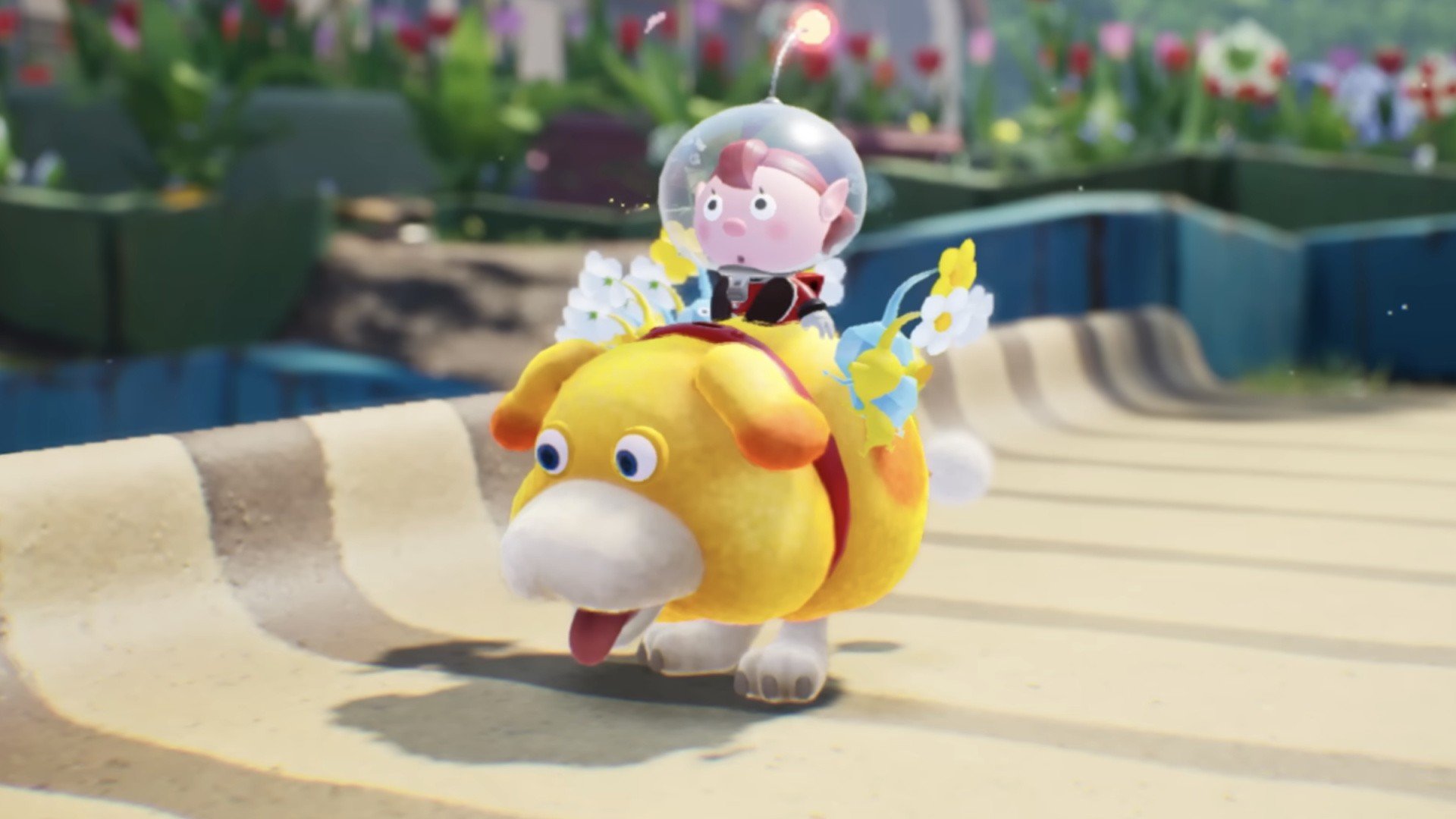 Pikmin 4 received a free update in November adding new content, but it wasn't a Switch 2 upgrade and didn't include any enhancements for the game on the new hybrid platform. With this in mind, the same Switch title has now reportedly popped up in a section on the eShop, which focuses on first-party Nintendo "games with free updates" and also notes how select titles are enhanced when played on the Switch 2. This discovery was originally shared on the Pikmin subreddit (via My Nintendo News) and has also surfaced in other regions, as highlighted by Universo Nintendo editor Felipe Lima. Here's the attached description along with a look: As you can see, the game featured alongside Pikmin 4 is The Legend of Zelda: Echoes of Wisdom, which did receive a free Switch 2 upgrade in June – optimising the game's visuals and adding HDR support. We've taken a look at the page, and it appears Pikmin 4 has now been removed from this section. The other titles listed here are based on the 12 free upgrades released alongside the launch of the Switch 2, and Splatoon 3 (which also got a Switch 2 update in June). So, what might all this mean? As mentioned in the post above, it could just be a "mistake" on Nintendo's end, so it's probably best not to get too excited. And now that it's been removed, it seems this might be the case. Of course, this hasn't stopped some Pikmin 4 enthusiasts from getting their hopes up – suggesting it could be a sign of a future update. For now, Pikmin 4 hasn't received a dedicated Switch 2 update. If we do hear any significant developments, we'll let you know.
 -
Pikmin 4 received a free update in November adding new content, but it wasn't a Switch 2 upgrade and didn't include any enhancements for the game on the new hybrid platform. With this in mind, the same Switch title has now reportedly popped up in a section on the eShop, which focuses on first-party Nintendo "games with free updates" and also notes how select titles are enhanced when played on the Switch 2. This discovery was originally shared on the Pikmin subreddit (via My Nintendo News) and has also surfaced in other regions, as highlighted by Universo Nintendo editor Felipe Lima. Here's the attached description along with a look: As you can see, the game featured alongside Pikmin 4 is The Legend of Zelda: Echoes of Wisdom, which did receive a free Switch 2 upgrade in June – optimising the game's visuals and adding HDR support. We've taken a look at the page, and it appears Pikmin 4 has now been removed from this section. The other titles listed here are based on the 12 free upgrades released alongside the launch of the Switch 2, and Splatoon 3 (which also got a Switch 2 update in June). So, what might all this mean? As mentioned in the post above, it could just be a "mistake" on Nintendo's end, so it's probably best not to get too excited. And now that it's been removed, it seems this might be the case. Of course, this hasn't stopped some Pikmin 4 enthusiasts from getting their hopes up – suggesting it could be a sign of a future update. For now, Pikmin 4 hasn't received a dedicated Switch 2 update. If we do hear any significant developments, we'll let you know. View full article
-
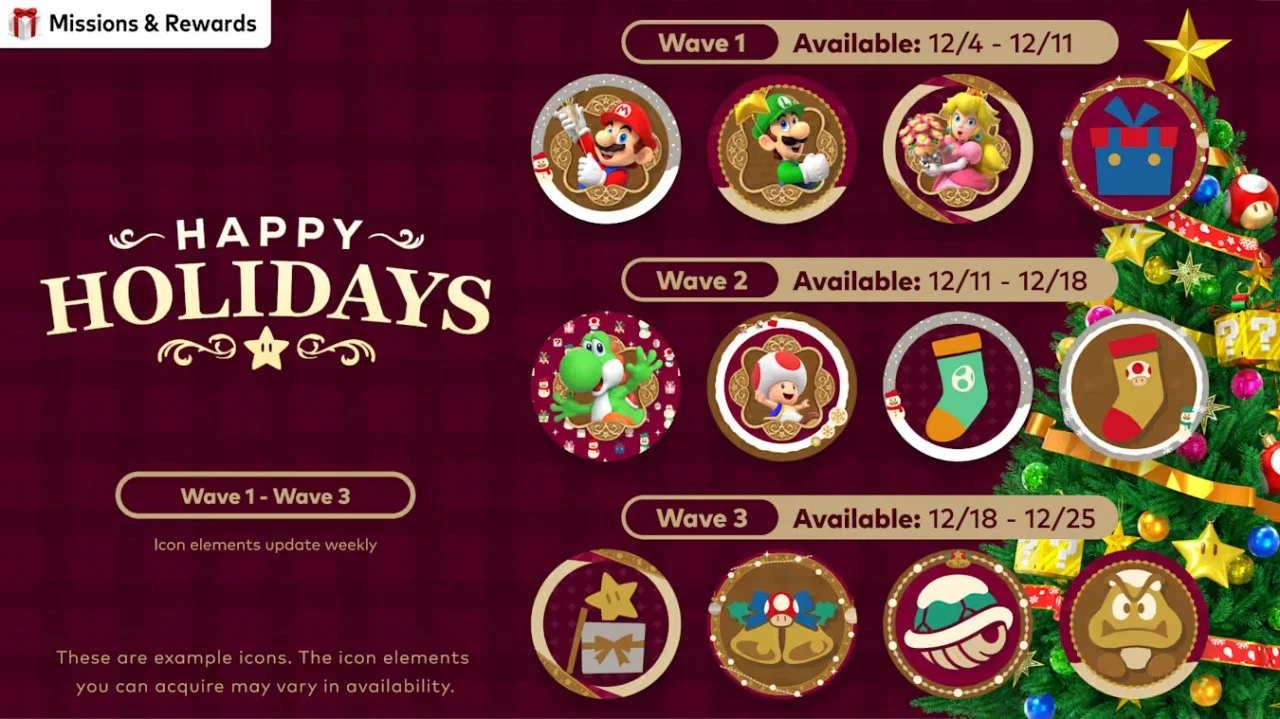 To celebrate the holiday season this year, Nintendo has released special Super Mario icons you can redeem right now with My Nintendo Platinum Points. This is a "limited time" offer, and the first wave is available from now until 11th December 2025. As you can see, there are icons for Mario and the rest of the gang, along with a few other themed designs. These icons are 10 Platinum Points each, and the borders and banners will set you back five Platinum Points each. Along with this, Nintendo has also released a new Super Mario Yoshi Holiday Ornament on its US storefront. This will set you back 400 Platinum Points. Here's the official description, along with a look: Image: Nintendo The Switch Online Calendar for 2026 is now also available to Switch Online members in the US. It's available for the 400 Platinum Points.
 -
To celebrate the holiday season this year, Nintendo has released special Super Mario icons you can redeem right now with My Nintendo Platinum Points. This is a "limited time" offer, and the first wave is available from now until 11th December 2025. As you can see, there are icons for Mario and the rest of the gang, along with a few other themed designs. These icons are 10 Platinum Points each, and the borders and banners will set you back five Platinum Points each. Along with this, Nintendo has also released a new Super Mario Yoshi Holiday Ornament on its US storefront. This will set you back 400 Platinum Points. Here's the official description, along with a look: Image: Nintendo The Switch Online Calendar for 2026 is now also available to Switch Online members in the US. It's available for the 400 Platinum Points. View full article
-
.jpg.07dfa1ce76b5cdad90ad252231757bbc.jpg) Splitgate 2 is coming back to PS5 and PS4 very soon, and not only has it been given a total overhaul, it's also got a new name. Now called Splitgate: Arena Reloaded, the free-to-play multiplayer FPS relaunches on 17th December 2025: The above trailer showcases some gameplay before design director Josh Watson gives an overview of exactly what's changed since Splitgate 2 was reverted back to beta. Here's a quick rundown of the major changes: Removal of factions and character-based abilities Overhauled progression and ranking systems Five brand new maps and six "fully-reworked" maps Four new weapons New modes Reduction in store prices and a simplified Battle Pass In a nutshell, developer 1047 Games has seriously streamlined the game, leaning on feedback from the community to get it back in a good place. The game didn't go down all that well when it first launched in June, so hopefully it's able to find its footing with this new iteration. Are you going to give Splitgate: Arena Reloaded a look when it arrives later this month? Tell us in the comments section below.
Splitgate 2 is coming back to PS5 and PS4 very soon, and not only has it been given a total overhaul, it's also got a new name. Now called Splitgate: Arena Reloaded, the free-to-play multiplayer FPS relaunches on 17th December 2025: The above trailer showcases some gameplay before design director Josh Watson gives an overview of exactly what's changed since Splitgate 2 was reverted back to beta. Here's a quick rundown of the major changes: Removal of factions and character-based abilities Overhauled progression and ranking systems Five brand new maps and six "fully-reworked" maps Four new weapons New modes Reduction in store prices and a simplified Battle Pass In a nutshell, developer 1047 Games has seriously streamlined the game, leaning on feedback from the community to get it back in a good place. The game didn't go down all that well when it first launched in June, so hopefully it's able to find its footing with this new iteration. Are you going to give Splitgate: Arena Reloaded a look when it arrives later this month? Tell us in the comments section below. -
Splitgate 2 is coming back to PS5 and PS4 very soon, and not only has it been given a total overhaul, it's also got a new name. Now called Splitgate: Arena Reloaded, the free-to-play multiplayer FPS relaunches on 17th December 2025: The above trailer showcases some gameplay before design director Josh Watson gives an overview of exactly what's changed since Splitgate 2 was reverted back to beta. Here's a quick rundown of the major changes: Removal of factions and character-based abilities Overhauled progression and ranking systems Five brand new maps and six "fully-reworked" maps Four new weapons New modes Reduction in store prices and a simplified Battle Pass In a nutshell, developer 1047 Games has seriously streamlined the game, leaning on feedback from the community to get it back in a good place. The game didn't go down all that well when it first launched in June, so hopefully it's able to find its footing with this new iteration. Are you going to give Splitgate: Arena Reloaded a look when it arrives later this month? Tell us in the comments section below. View full article
-
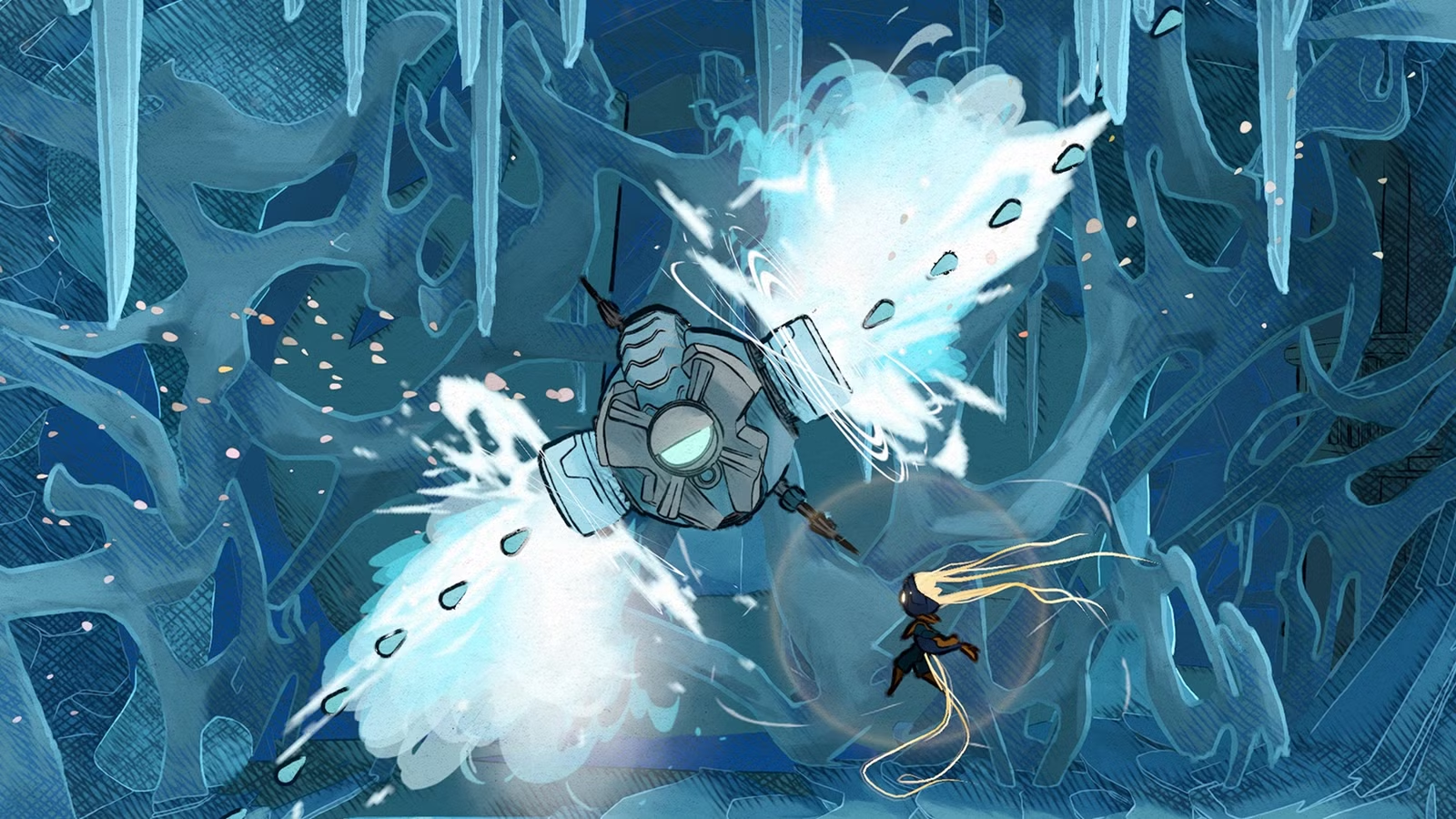 You may have forgotten about MIO: Memories in Orbit, a Metroidvania action platformer announced earlier this year. Well, publisher Focus Entertainment has finally announced a release date; it comes to PS5 very soon, on 20th January 2026. MIO is the name of the little robot you play as. They've lost their memories, and you'll have to navigate a vast, maze-like spaceship in order to solve its mysteries. It looks to contain your typical Metroidvania fare, with a mix of combat and traversal as you slowly explore every corner of the map. In a sci-fi setting and with a stylish look, it's certainly doing something a little different from the competition, but said competition now includes Hollow Knight: Silksong — one of the most hotly anticipated games of the last few years, and now one of 2025's highest rated titles. It'll be interesting to see whether MIO can stand out and resonate with fans of the genre, or if the appetite for games like this has waned in the months since Silksong's arrival. Whatever the case, the game has promise — now we just need to play it and see how it feels. If it has nice, responsive gameplay and an engaging story, it should be golden. Are you excited for MIO: Memories in Orbit on PS5? Tell us in the comments section below.
 -
You may have forgotten about MIO: Memories in Orbit, a Metroidvania action platformer announced earlier this year. Well, publisher Focus Entertainment has finally announced a release date; it comes to PS5 very soon, on 20th January 2026. MIO is the name of the little robot you play as. They've lost their memories, and you'll have to navigate a vast, maze-like spaceship in order to solve its mysteries. It looks to contain your typical Metroidvania fare, with a mix of combat and traversal as you slowly explore every corner of the map. In a sci-fi setting and with a stylish look, it's certainly doing something a little different from the competition, but said competition now includes Hollow Knight: Silksong — one of the most hotly anticipated games of the last few years, and now one of 2025's highest rated titles. It'll be interesting to see whether MIO can stand out and resonate with fans of the genre, or if the appetite for games like this has waned in the months since Silksong's arrival. Whatever the case, the game has promise — now we just need to play it and see how it feels. If it has nice, responsive gameplay and an engaging story, it should be golden. Are you excited for MIO: Memories in Orbit on PS5? Tell us in the comments section below. View full article
-
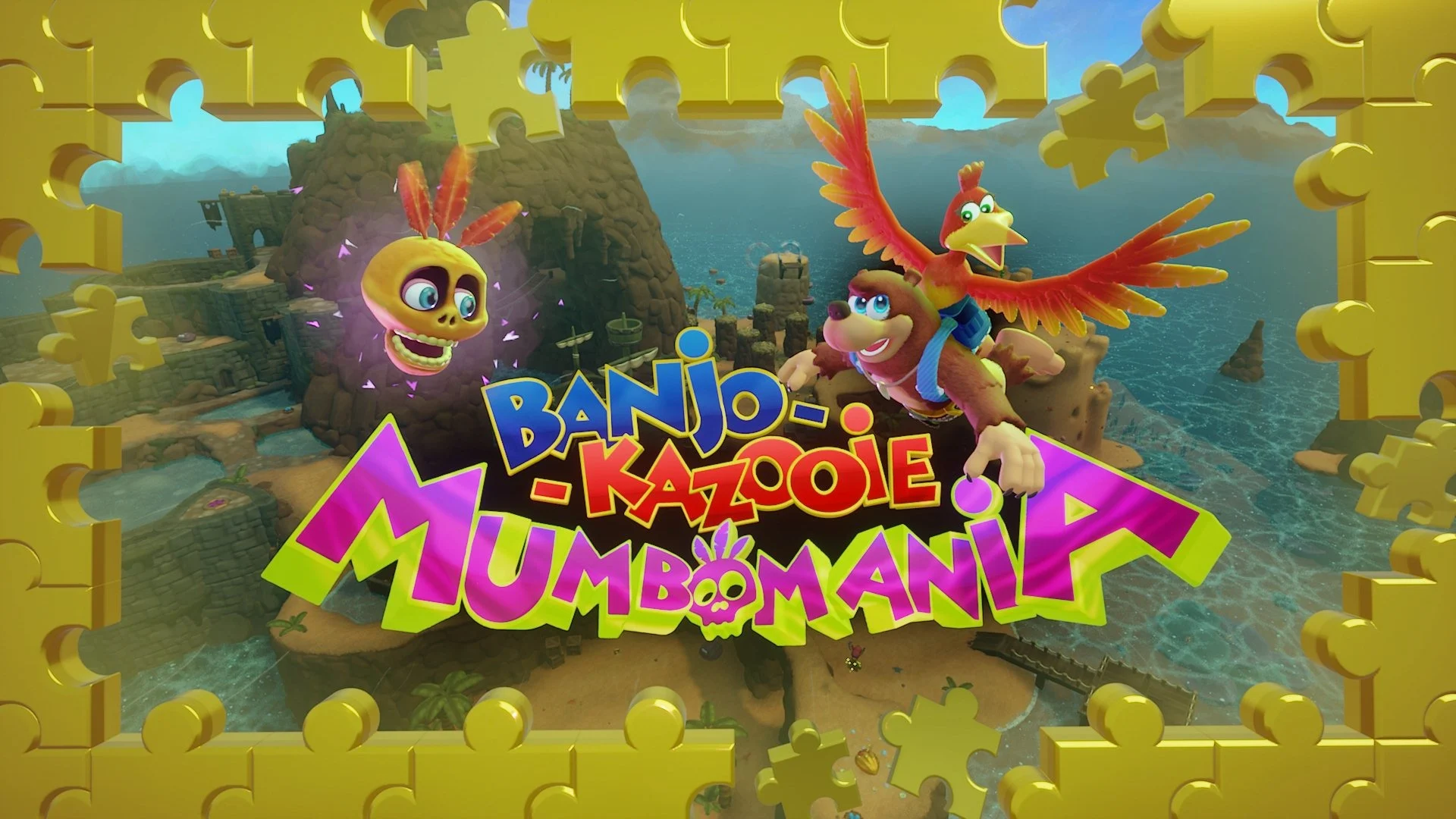 Alright, so you probably saw the news about this "Banjo-Kazooie: Mumbomania" project that was cross-posted to Pure Xbox by our friends at Push Square yesterday - a game made in Dreams for PS5 that's gone viral this week. The gist is that someone made their own version of Banjo-Kazooie inside of the PS5 creation tool, and it's so impressive that even the Xbox Studio "Rare" (the original developer of Banjo-Kazooie) highlighted it as some "incredible work". The big problem with this is that it's reminding everyone how Xbox still hasn't done anything significant with the Banjo-Kazooie IP in years, and Rare in particular seems to be getting inundated with requests to make a new game. Here's just a small example of the bombardment of comments being sent their way on Twitter: From a faraway vantage point, it does make a lot of sense. Sea Of Thieves obviously continues to be a success for Rare, but Everwild unfortunately ended up getting cancelled earlier this year following a long development period. A new Banjo-Kazooie game feels like it would print money no matter what, and even though Rare has changed substantially over the years, it's always been a supremely talented studio - we have faith they could pull something special off. The creator of this Dreams project is interested in getting involved as well! Again though, we're looking at this from a very faraway vantage point in which we don't know the inner workings of Rare and Xbox Game Studios. Perhaps Xbox already has a studio on a Banjo game? Perhaps Rare is that studio? Maybe there are very good reasons why Xbox and/or Rare still don't want to touch the IP after all these years? Whatever the case may be, the demand for a new Banjo-Kazooie game isn't going to go away, and it just seems like a matter of time until Xbox finally delivers something new for the series. It just remains to be seen what form that'll take, and which studio will be behind it.
 -
Alright, so you probably saw the news about this "Banjo-Kazooie: Mumbomania" project that was cross-posted to Pure Xbox by our friends at Push Square yesterday - a game made in Dreams for PS5 that's gone viral this week. The gist is that someone made their own version of Banjo-Kazooie inside of the PS5 creation tool, and it's so impressive that even the Xbox Studio "Rare" (the original developer of Banjo-Kazooie) highlighted it as some "incredible work". The big problem with this is that it's reminding everyone how Xbox still hasn't done anything significant with the Banjo-Kazooie IP in years, and Rare in particular seems to be getting inundated with requests to make a new game. Here's just a small example of the bombardment of comments being sent their way on Twitter: From a faraway vantage point, it does make a lot of sense. Sea Of Thieves obviously continues to be a success for Rare, but Everwild unfortunately ended up getting cancelled earlier this year following a long development period. A new Banjo-Kazooie game feels like it would print money no matter what, and even though Rare has changed substantially over the years, it's always been a supremely talented studio - we have faith they could pull something special off. The creator of this Dreams project is interested in getting involved as well! Again though, we're looking at this from a very faraway vantage point in which we don't know the inner workings of Rare and Xbox Game Studios. Perhaps Xbox already has a studio on a Banjo game? Perhaps Rare is that studio? Maybe there are very good reasons why Xbox and/or Rare still don't want to touch the IP after all these years? Whatever the case may be, the demand for a new Banjo-Kazooie game isn't going to go away, and it just seems like a matter of time until Xbox finally delivers something new for the series. It just remains to be seen what form that'll take, and which studio will be behind it. View full article
-
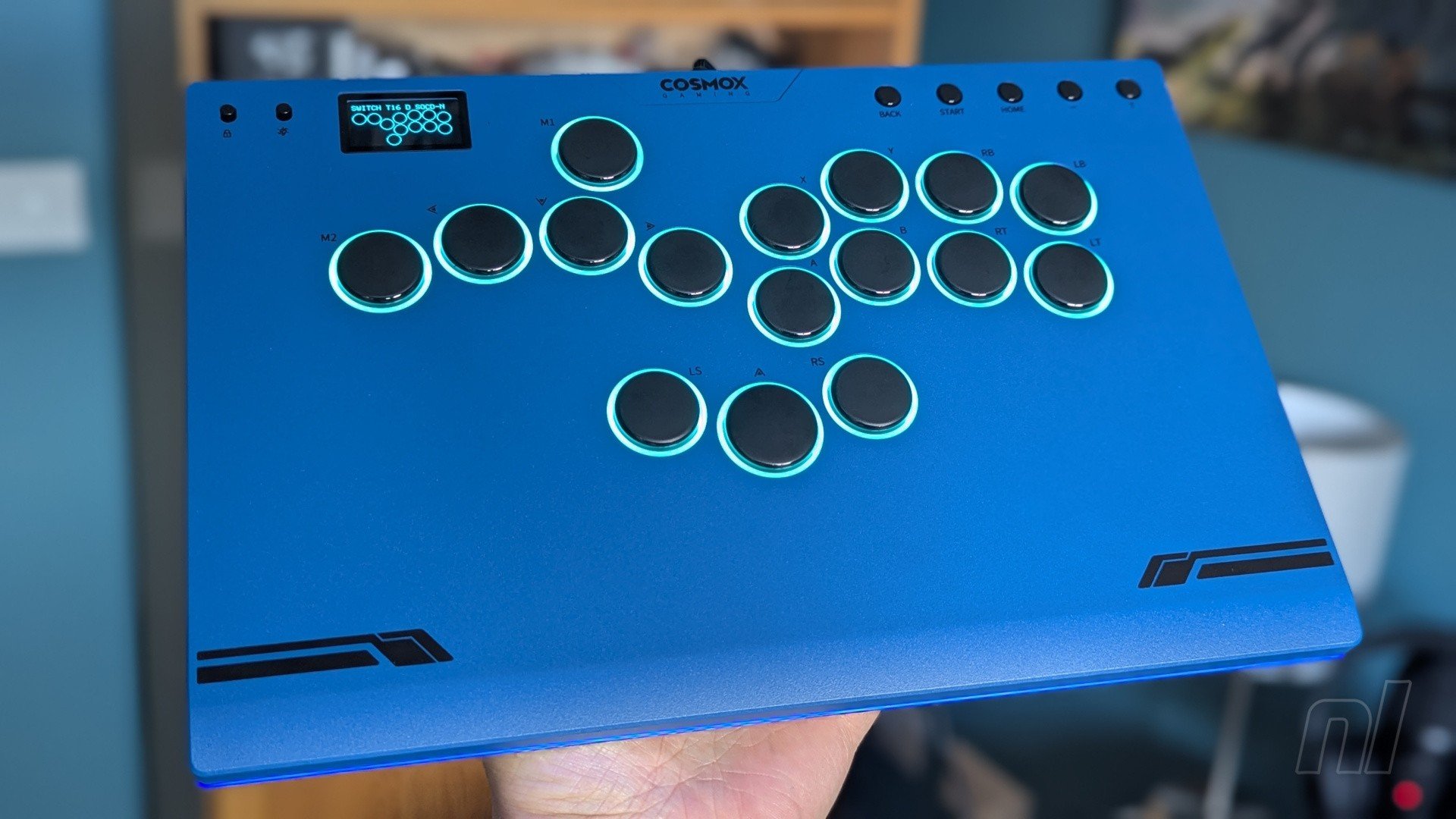 Cosmox Gaming offers up a lot of arcade controllers, including the modular Hautepad X at a more premium price and the remarkably affordable Hautepad C16. Now, the company has launched the M-Ultra Gen2, an aluminium-built leverless that sits somewhere in-between the two. If the C-16 is primarily aimed at beginners and the X is for the more hardcore enthusiasts, then the M-Ultra Gen2 is, theoretically, for everybody. It’s quite possibly Cosmox’s best controller yet. Priced at just over £110 (or $149.99 in the US), the Gen2 is more expensive than the aforementioned C-16 and 8BitDo’s Arcade Controller, but still sits comfortably toward the more ‘affordable’ end of the spectrum. You wouldn’t think that after going hands on with it, though. With its aluminium build, the Gen2 is a solid, heavy device that feels a lot more comparable to the Hautepad X. The surface is slightly textured, meaning it won’t attract any nasty fingerprints when handled over time. With models available in both black and blue, I can’t say for definite whether the black version also repels smudges and grime, but the blue model has remained completely spotless after my time with it. Like the previous models, the Gen2 is compatible with the Switch and Switch 2 right out of the box – just hold down the relevant button to enable Switch Mode while plugging the device in, and you’re good to go. Naturally, you can use the controller with most modern systems, but just keep in mind that you’ll need an extra authenticator to use it with a PS5 or Xbox. Speaking of plugs, you get a braided USB-A to USB-C cable, which can either go into the top of the controller or over on the left hand side. If you opt for the top, Cosmox has included a new security clasp to lock the cable in place. You just pull the small switch down to open it up, and the actual port is housed about an inch inside. Once the cable is plugged in and the clasp is locked, there’s no way of accidentally yanking it back out – very handy. The 16 button layout is pretty standard, with four directional inputs, eight action inputs, and four additional programmable buttons. They utilize Shadow Hunting switches, which are comfortably the lowest-profile yet, and this makes actuation exceedingly quick. In fact, the low profile makes advanced techniques like sliding easier than ever, while they still allow for other methods like double-tapping a single button with two fingers. So all of this combined with the relatively close spacing between the buttons themselves make general gameplay feel more comfortable than ever. Seriously, if you thought pulling off combos in Street Fighter 6 was easy on the C-16, then you’ve seen nothing yet – I wouldn’t be surprised if the Shadow Hunting switches just become the new standard going forward. It's incredibly comfortable to use, and I’ve no doubt it’ll give you an edge if you play competitively. Taking inspiration from the C-16, all switches include customizable RGB rings which you can tinker with on the device itself via several button combinations. If you want to go even further, you can connect the Gen2 to a PC or Mac and follow the URL address displayed on the controller’s screen to reach the web configurator. Here, you can set the RGB rings to whatever color you wish and remap the inputs, setting several profiles depending on what kind of game you’re playing. As is the standard now for Cosmox, the Gen2 also features its own OLED screen to display button-presses in real-time along with your input mode and SOCD mode (plus you can upload custom pixel art via the configurator if you want to personalise it even more). It’s larger than ever this time, which is great if you’re after a bit more clarity, though I’d probably prefer it to be situated more in the middle of the device rather than toward the left. Symmetry ‘n’ all that. And of course, you’ve got a tournament lock switch on the top left alongside one to toggle the RGB lights on and off. Over on the right are your function buttons like start, select, home, etc. Everything’s labelled nicely, including the main face buttons, but keep in mind that when you’re in Switch Mode, the labels won’t match up with the actual in-game inputs. You’re not going to be looking at the buttons much either way, so it probably won’t matter, but if you’re sensitive about this kind of thing, it’s worth keeping in mind. If it really bothers you, then just remap the inputs via the configurator to match the labelling. ConclusionI can’t overstate just how nice the M-Ultra Gen2 feels to use. With each new release, it feels like Cosmox Gaming is making more and more small tweaks to achieve eventual perfection. It’s not quite there yet – the 8BitDo Arcade Controller’s ability to dynamically change the button labelling is still a marvel – but the way the buttons feel and the overall build quality of the Gen2 is incredible. Simply put, this is the company’s strongest effort yet, and one of the best leverless arcade controllers available if you’re on a budget.
 -
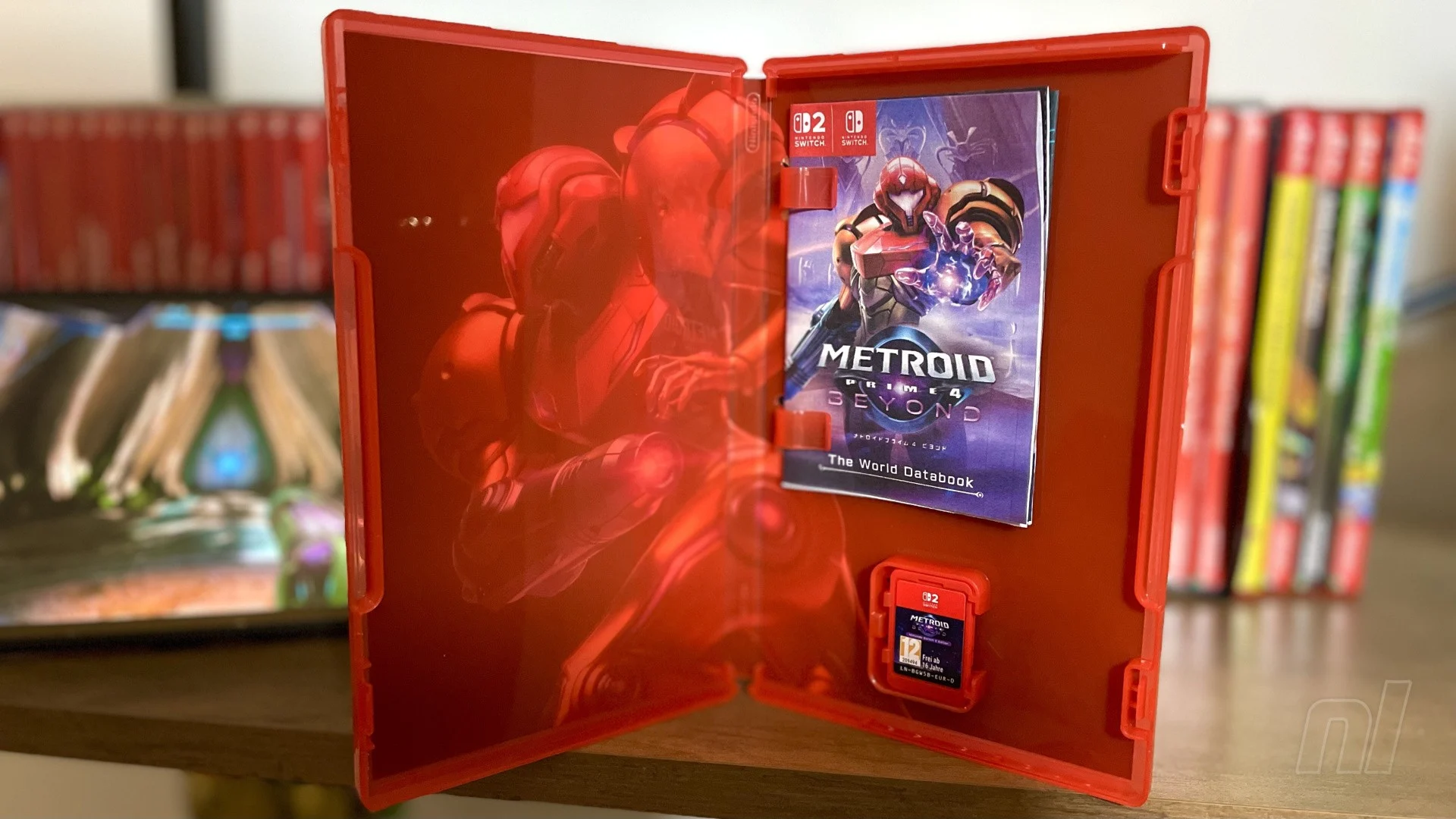 Bar a few exceptions, the days of opening your boxed copy of a new game and eagerly flipping through the instruction booklet are behind us. But it looks like Nintendo isn't ready to give up on the nostalgia just yet, as it has released a printable 'databook' for Metroid Prime 4: Beyond, that just makes our hearts sing (thanks for the heads up, @ninpatentswatch). The booklet is only available on the Japanese Nintendo website at the time of writing — with all of the text in Japanese, natch — but it scratches such a retro itch for us that we're amazed the big N doesn't do something similar for all its releases. The 24-page 'World Databook', to give it its official title, is full of a lot of things you would expect from a classic instruction manual, including game controls and character introductions, but there are also rundowns of the game's main locales and mechanics, with a sneaky bit of lore peppered in there, too. Here's a couple of pages, so you can get a taste for what's inside: Images: Nintendo The full PDF has instructions for how to print and fold the booklet, so you can rest easy knowing that it'll slot nicely into those under-utilised plastic clips that occupy the top half of all modern game cases. Would opening the in-game menu and looking up the controls that way be an awful lot easier? Sure it would. But come on, where's the fun in that?
 -
Bar a few exceptions, the days of opening your boxed copy of a new game and eagerly flipping through the instruction booklet are behind us. But it looks like Nintendo isn't ready to give up on the nostalgia just yet, as it has released a printable 'databook' for Metroid Prime 4: Beyond, that just makes our hearts sing (thanks for the heads up, @ninpatentswatch). The booklet is only available on the Japanese Nintendo website at the time of writing — with all of the text in Japanese, natch — but it scratches such a retro itch for us that we're amazed the big N doesn't do something similar for all its releases. The 24-page 'World Databook', to give it its official title, is full of a lot of things you would expect from a classic instruction manual, including game controls and character introductions, but there are also rundowns of the game's main locales and mechanics, with a sneaky bit of lore peppered in there, too. Here's a couple of pages, so you can get a taste for what's inside: Images: Nintendo The full PDF has instructions for how to print and fold the booklet, so you can rest easy knowing that it'll slot nicely into those under-utilised plastic clips that occupy the top half of all modern game cases. Would opening the in-game menu and looking up the controls that way be an awful lot easier? Sure it would. But come on, where's the fun in that? View full article
-
Romeo Is A Dead Man is the first brand-new IP from Grasshopper Manufacture Inc., Goichi ‘Suda51’ Suda's new studio. The developer announced that the game will release early next year and aired a new trailer: “Now we've won our game of chicken against cough a certain twice-delayed 2026 release, we can reveal our cards and confirm we never intended to launch in May in the first place,” Executive Director/Scenario Writer/Producer, Grasshopper Manufacture, Goichi ‘Suda51’ Suda, said. “We're warping space-time to put the finishing touches to ROMEO IS A DEAD MAN ahead of its launch next February.” Romeo Is A Dead Manwill launch on 11th February 2026 on PlayStation 5, Xbox Series X|S, and Steam.
-
Sad Cat Studios and Thunderful are finally able to provide a firm release date for their cyberpunk action platformer, Replaced. To accompany the announcement, they aired a new trailer: Replacedwill be releasing on PC and Xbox Series X|S on March 12th.
-
One of the great classics from the original Build Engine FPS era got a brand new re-release today, by the hands of none other than the remaster veterans from Nightdive Studios. This brand new re-release adds an incredible amount of polish and quality of life features to the original game, making this the definitive way to experience one of the great classics from the early FPS days "Blood", alongside its brethren Duke Nukem 3D and Shadow Warrior made a trifecta of Build Engine games back in the late 90s. Nightdive's remaster of Blood includes many new things and enhancements: Includes the original Blood and its Cryptic Passage add-ons. Rebuilt from the original source code. New Vault with dozens of playable cut-content levels, concept art, behind-the-scenes photos, and unused sprites. Remastered Cutscenes. Expanded options for improved enemy behavior, weather effects (a previously cut feature), and other enhancements. Bug fixes for the original levels. Includes new Marrow scenario (available at launch) and Death Wish scenario (planned future update) High-resolution support, including 4K monitors Unlocked framerates Customizable keyboard and controller gamepad support Extended modding support, including existing mods Rewritten netcode supporting up to 8 players Local split-screen and online co-op CD and MIDI music support "Blood: Refreshed Supply" is now available for PC through Steam, GOG and Epic, and gaming consoles PlayStation 4/PlayStation 5, Xbox One and Xbox Series, as well as Nintendo Switch 1. It's still unknown if the game runs on a Switch 2 under Switch 1 compatibility.
-
PlayStation's Dreams may not be receiving the same amount of excitement that it garnered during its launch in 2020, but there are some dedicated users still creating impressive fan content with it. A team of three creators managed to make a short fan-game based on Banjo-Kazooie, titled Banjo-Kazooie: Mumbomania. It plays much like the classic entries in the franchise, featuring platforming and collectibles. The game is available to download and play on Dreams for PS4 or PS5, and even has a trailer showcasing some gameplay.
-
.jpg.0d8df57b6289c01dbc8dc357ad791c41.jpg) Avatar: Frontiers of Pandora - From the Ashes is a bigger deal than we initially thought. The third paid DLC for Massive Entertainment’s 2023 movie tie-in offers up a 25-hour campaign, a new region, and the highly requested third-person mode. But what really struck us was a greater sense of what was described as “brand synergy”. That’s what Lightstorm Entertainment’s executive vice president of multimedia development, Joshua Izzo, said when we flew out to Lightstorm’s HQ in LA. There, we got a sneak peek at James Cameron’s upcoming Avatar: Fire And Ash, which was about as visually mindblowing as you’d expect, as well as some hands-on time with this new DLC. The standalone pack, which will cost £21.99/$32,99, focuses on the previous side character So’Lek, as he tries to take down the villainous Na’Vi Ash clan – the big bads in the upcoming film. It’s clear that Ubisoft and Disney are aiming for a more cohesive brand experience, so players will be able to take on the Ash Clan in-game the very same day that Fire and Ash drops in cinemas, on December 19th. In addition, mentions of specific characters, events, and even the supposed presence of full clans from the new movie make this DLC feel like a much bigger event. It’s not quite winks and nods anymore; it’s now a cog in the Pandora machine. As Avatar fans, we loved this sense of narrative cohesion. However, lore and movie tie-ins aside, the thing we were most amped to try was the long-requested third-person mode. Available now as a free update, this third-person mode can be played in the main game, on top of From The Ashes. Simply put, third-person reinvents the game. Massive Entertainment has gone above and beyond to implement a third-person mode that feels cinematic, immersive, and most importantly, it doesn't feel like a tack-on. Combat is incredibly sharp, especially with its unique kill animations that let you take out RDA mechs in style. And since you can also play the base game in third-person, too, you can finally check out your customisable Na'Vi attire, which was previously only noticeable in third-person flying. It's not entirely cohesive, however, as some interactions, like soothing a direhorse, will thrust you back into first-person. And if you play the base game again, you'll transition to its first-person cutscenes with a brief black screen, shattering some immersion. There are still some reminders that this was a first-person game first. From The Ashes solves some of these issues with far more immersive third-person cutscenes, however, which are a noted improvement over the base campaign. But the main thing is traversal, combat, and the immersion factor are all top-tier with the new third-person mode, and if you don't like it, you can switch back to first-person whenever you please. That leads us into the story of From The Ashes. We enjoyed moments of Frontier’s campaign, but this is a definite leg up that we think Avatar fans are really going to dig. It’s got those typical hallmarks – bad humans trying to pillage Pandora of its resources – but So’Lek is a much more compelling protagonist, and the story actually sets up three big bad Na’Vi that must be taken down, giving the whole thing a bit more direction. With the new perspective and new style of cutscene, From The Ashes has much more cinematic appeal, and we often felt the urge to stop and gawk at the expansive vistas. The Kinglor Forest, an area from the base game, is now scarred, as broken branches and tire-treaded dirt tracks replace the once vibrant woodlands. Ubisoft says that the map will steadily evolve across the From The Ashes campaign. A surprising new addition in From The Ashes is boss fights, which were strangely absent from Frontiers. During our session – roughly 90 minutes early on in the DLC – we fought giant creatures and even other Na’Vi. While a big deal was made out of this by the Massive Entertainment developers, boss fights were a bit of a letdown. We can’t speak for all of them, of course, but those we did fight were rather rinse and repeat, with abnormally strong bullet (and arrow) sponge enemies. The biggest letdown was the Ash clan enemies. We hoped that these would be introduced to the regular roster of enemies, but they seem to be exclusively reserved for boss types. If nothing else, it feels like a missed opportunity. There are other attempts to spice up the combat, however. So’Lek comes with his own set of skills to unlock, which aid him in battle, and he is also equipped with a sort of berserk mode. This allows So’Lek to massively increase damage output and defence for a short time, which can be great fun as you tear through armoured RDA mechs. There are also new mech variants and a sort of robot dog to shake things up a little more. In conjunction with the third-person mode, we still really enjoyed enemy encounters as we jumped around, weaving in and out of stealth, and switching through the arsenal of weaponry at hand. The big “but” of this preview is that the whole thing was played on PC, so the jury is still out on how this will pan out on PS5. We did use a DualSense controller, so we can say that the haptics are still as excellent as they are in the base game. While we never had any performance or visual issues on PS5 before (outside of a sketchy PS5 Pro update), we’ll need to wait for the full release to check back on performance. Avatar Frontiers of Pandora - From The Ashes is a sneakily ambitious DLC. It’s got an expansive campaign that feels more tied to the wider world than ever before, with meaningful changes to combat, albeit missed opportunities with its Na’Vi enemies. The icing on the cake is the third-person mode, which for us just massively improves the experience — we wouldn’t play the game any other way now. There are a lot of ifs and buts to address with the full release, like how the narrative unfolds, how it runs on PS5, and there’s even a whole new area in the DLC that we didn’t get to see. But, as it stands, From the Ashes is an exciting next step in an ever-expanding and evolving sci-fi world that's a delight to explore on PS5, and the new third-person mode is the perfect excuse to check out the base game, if you haven’t already. Avatar: Frontiers of Pandora - From the Ashes drops on PS5 on December 19th, and the third-person update is available now. Will you be checking them out? Let us know in the comments below.
Avatar: Frontiers of Pandora - From the Ashes is a bigger deal than we initially thought. The third paid DLC for Massive Entertainment’s 2023 movie tie-in offers up a 25-hour campaign, a new region, and the highly requested third-person mode. But what really struck us was a greater sense of what was described as “brand synergy”. That’s what Lightstorm Entertainment’s executive vice president of multimedia development, Joshua Izzo, said when we flew out to Lightstorm’s HQ in LA. There, we got a sneak peek at James Cameron’s upcoming Avatar: Fire And Ash, which was about as visually mindblowing as you’d expect, as well as some hands-on time with this new DLC. The standalone pack, which will cost £21.99/$32,99, focuses on the previous side character So’Lek, as he tries to take down the villainous Na’Vi Ash clan – the big bads in the upcoming film. It’s clear that Ubisoft and Disney are aiming for a more cohesive brand experience, so players will be able to take on the Ash Clan in-game the very same day that Fire and Ash drops in cinemas, on December 19th. In addition, mentions of specific characters, events, and even the supposed presence of full clans from the new movie make this DLC feel like a much bigger event. It’s not quite winks and nods anymore; it’s now a cog in the Pandora machine. As Avatar fans, we loved this sense of narrative cohesion. However, lore and movie tie-ins aside, the thing we were most amped to try was the long-requested third-person mode. Available now as a free update, this third-person mode can be played in the main game, on top of From The Ashes. Simply put, third-person reinvents the game. Massive Entertainment has gone above and beyond to implement a third-person mode that feels cinematic, immersive, and most importantly, it doesn't feel like a tack-on. Combat is incredibly sharp, especially with its unique kill animations that let you take out RDA mechs in style. And since you can also play the base game in third-person, too, you can finally check out your customisable Na'Vi attire, which was previously only noticeable in third-person flying. It's not entirely cohesive, however, as some interactions, like soothing a direhorse, will thrust you back into first-person. And if you play the base game again, you'll transition to its first-person cutscenes with a brief black screen, shattering some immersion. There are still some reminders that this was a first-person game first. From The Ashes solves some of these issues with far more immersive third-person cutscenes, however, which are a noted improvement over the base campaign. But the main thing is traversal, combat, and the immersion factor are all top-tier with the new third-person mode, and if you don't like it, you can switch back to first-person whenever you please. That leads us into the story of From The Ashes. We enjoyed moments of Frontier’s campaign, but this is a definite leg up that we think Avatar fans are really going to dig. It’s got those typical hallmarks – bad humans trying to pillage Pandora of its resources – but So’Lek is a much more compelling protagonist, and the story actually sets up three big bad Na’Vi that must be taken down, giving the whole thing a bit more direction. With the new perspective and new style of cutscene, From The Ashes has much more cinematic appeal, and we often felt the urge to stop and gawk at the expansive vistas. The Kinglor Forest, an area from the base game, is now scarred, as broken branches and tire-treaded dirt tracks replace the once vibrant woodlands. Ubisoft says that the map will steadily evolve across the From The Ashes campaign. A surprising new addition in From The Ashes is boss fights, which were strangely absent from Frontiers. During our session – roughly 90 minutes early on in the DLC – we fought giant creatures and even other Na’Vi. While a big deal was made out of this by the Massive Entertainment developers, boss fights were a bit of a letdown. We can’t speak for all of them, of course, but those we did fight were rather rinse and repeat, with abnormally strong bullet (and arrow) sponge enemies. The biggest letdown was the Ash clan enemies. We hoped that these would be introduced to the regular roster of enemies, but they seem to be exclusively reserved for boss types. If nothing else, it feels like a missed opportunity. There are other attempts to spice up the combat, however. So’Lek comes with his own set of skills to unlock, which aid him in battle, and he is also equipped with a sort of berserk mode. This allows So’Lek to massively increase damage output and defence for a short time, which can be great fun as you tear through armoured RDA mechs. There are also new mech variants and a sort of robot dog to shake things up a little more. In conjunction with the third-person mode, we still really enjoyed enemy encounters as we jumped around, weaving in and out of stealth, and switching through the arsenal of weaponry at hand. The big “but” of this preview is that the whole thing was played on PC, so the jury is still out on how this will pan out on PS5. We did use a DualSense controller, so we can say that the haptics are still as excellent as they are in the base game. While we never had any performance or visual issues on PS5 before (outside of a sketchy PS5 Pro update), we’ll need to wait for the full release to check back on performance. Avatar Frontiers of Pandora - From The Ashes is a sneakily ambitious DLC. It’s got an expansive campaign that feels more tied to the wider world than ever before, with meaningful changes to combat, albeit missed opportunities with its Na’Vi enemies. The icing on the cake is the third-person mode, which for us just massively improves the experience — we wouldn’t play the game any other way now. There are a lot of ifs and buts to address with the full release, like how the narrative unfolds, how it runs on PS5, and there’s even a whole new area in the DLC that we didn’t get to see. But, as it stands, From the Ashes is an exciting next step in an ever-expanding and evolving sci-fi world that's a delight to explore on PS5, and the new third-person mode is the perfect excuse to check out the base game, if you haven’t already. Avatar: Frontiers of Pandora - From the Ashes drops on PS5 on December 19th, and the third-person update is available now. Will you be checking them out? Let us know in the comments below. -
Avatar: Frontiers of Pandora - From the Ashes is a bigger deal than we initially thought. The third paid DLC for Massive Entertainment’s 2023 movie tie-in offers up a 25-hour campaign, a new region, and the highly requested third-person mode. But what really struck us was a greater sense of what was described as “brand synergy”. That’s what Lightstorm Entertainment’s executive vice president of multimedia development, Joshua Izzo, said when we flew out to Lightstorm’s HQ in LA. There, we got a sneak peek at James Cameron’s upcoming Avatar: Fire And Ash, which was about as visually mindblowing as you’d expect, as well as some hands-on time with this new DLC. The standalone pack, which will cost £21.99/$32,99, focuses on the previous side character So’Lek, as he tries to take down the villainous Na’Vi Ash clan – the big bads in the upcoming film. It’s clear that Ubisoft and Disney are aiming for a more cohesive brand experience, so players will be able to take on the Ash Clan in-game the very same day that Fire and Ash drops in cinemas, on December 19th. In addition, mentions of specific characters, events, and even the supposed presence of full clans from the new movie make this DLC feel like a much bigger event. It’s not quite winks and nods anymore; it’s now a cog in the Pandora machine. As Avatar fans, we loved this sense of narrative cohesion. However, lore and movie tie-ins aside, the thing we were most amped to try was the long-requested third-person mode. Available now as a free update, this third-person mode can be played in the main game, on top of From The Ashes. Simply put, third-person reinvents the game. Massive Entertainment has gone above and beyond to implement a third-person mode that feels cinematic, immersive, and most importantly, it doesn't feel like a tack-on. Combat is incredibly sharp, especially with its unique kill animations that let you take out RDA mechs in style. And since you can also play the base game in third-person, too, you can finally check out your customisable Na'Vi attire, which was previously only noticeable in third-person flying. It's not entirely cohesive, however, as some interactions, like soothing a direhorse, will thrust you back into first-person. And if you play the base game again, you'll transition to its first-person cutscenes with a brief black screen, shattering some immersion. There are still some reminders that this was a first-person game first. From The Ashes solves some of these issues with far more immersive third-person cutscenes, however, which are a noted improvement over the base campaign. But the main thing is traversal, combat, and the immersion factor are all top-tier with the new third-person mode, and if you don't like it, you can switch back to first-person whenever you please. That leads us into the story of From The Ashes. We enjoyed moments of Frontier’s campaign, but this is a definite leg up that we think Avatar fans are really going to dig. It’s got those typical hallmarks – bad humans trying to pillage Pandora of its resources – but So’Lek is a much more compelling protagonist, and the story actually sets up three big bad Na’Vi that must be taken down, giving the whole thing a bit more direction. With the new perspective and new style of cutscene, From The Ashes has much more cinematic appeal, and we often felt the urge to stop and gawk at the expansive vistas. The Kinglor Forest, an area from the base game, is now scarred, as broken branches and tire-treaded dirt tracks replace the once vibrant woodlands. Ubisoft says that the map will steadily evolve across the From The Ashes campaign. A surprising new addition in From The Ashes is boss fights, which were strangely absent from Frontiers. During our session – roughly 90 minutes early on in the DLC – we fought giant creatures and even other Na’Vi. While a big deal was made out of this by the Massive Entertainment developers, boss fights were a bit of a letdown. We can’t speak for all of them, of course, but those we did fight were rather rinse and repeat, with abnormally strong bullet (and arrow) sponge enemies. The biggest letdown was the Ash clan enemies. We hoped that these would be introduced to the regular roster of enemies, but they seem to be exclusively reserved for boss types. If nothing else, it feels like a missed opportunity. There are other attempts to spice up the combat, however. So’Lek comes with his own set of skills to unlock, which aid him in battle, and he is also equipped with a sort of berserk mode. This allows So’Lek to massively increase damage output and defence for a short time, which can be great fun as you tear through armoured RDA mechs. There are also new mech variants and a sort of robot dog to shake things up a little more. In conjunction with the third-person mode, we still really enjoyed enemy encounters as we jumped around, weaving in and out of stealth, and switching through the arsenal of weaponry at hand. The big “but” of this preview is that the whole thing was played on PC, so the jury is still out on how this will pan out on PS5. We did use a DualSense controller, so we can say that the haptics are still as excellent as they are in the base game. While we never had any performance or visual issues on PS5 before (outside of a sketchy PS5 Pro update), we’ll need to wait for the full release to check back on performance. Avatar Frontiers of Pandora - From The Ashes is a sneakily ambitious DLC. It’s got an expansive campaign that feels more tied to the wider world than ever before, with meaningful changes to combat, albeit missed opportunities with its Na’Vi enemies. The icing on the cake is the third-person mode, which for us just massively improves the experience — we wouldn’t play the game any other way now. There are a lot of ifs and buts to address with the full release, like how the narrative unfolds, how it runs on PS5, and there’s even a whole new area in the DLC that we didn’t get to see. But, as it stands, From the Ashes is an exciting next step in an ever-expanding and evolving sci-fi world that's a delight to explore on PS5, and the new third-person mode is the perfect excuse to check out the base game, if you haven’t already. Avatar: Frontiers of Pandora - From the Ashes drops on PS5 on December 19th, and the third-person update is available now. Will you be checking them out? Let us know in the comments below. View full article
-
.jpg.9a06ee827f4fc42ce68f9a40b136d0e5.jpg) Michael, one of the three main characters from the single player story in GTA 5, will return to the GTA Online part of the experience next week in a free update. You can get a bit of visual context in the trailer above. Across a new series of missions featuring the protagonist, you shall work towards earning your very own mansion. "For those who have reached the highest rungs of the criminal ladder, celebrate your triumph with a painstakingly crafted palace in one of Los Santos’ most exclusive neighborhoods, complete with breathtaking views, the finest amenities, and countless ways to customize and make it your own." The free update is called A Safehouse in the Hills, and it'll become part of GTA Online for free on 10th December 2025. There'll be three mansions you can buy for your custom character, and they all include an AI assistant, pets, a huge garage for your cars, trophy cabinets, a private salon, an armory, and more. For where Michael is present, voice actor Ned Luke reprises his role as the character. Also included in the patch will be a new mission creator feature, which has been rumored to be coming for a number of years now. In it, you can "design and publish your own Missions using sophisticated game mechanics, custom objectives, placeable actors, and much more".
Michael, one of the three main characters from the single player story in GTA 5, will return to the GTA Online part of the experience next week in a free update. You can get a bit of visual context in the trailer above. Across a new series of missions featuring the protagonist, you shall work towards earning your very own mansion. "For those who have reached the highest rungs of the criminal ladder, celebrate your triumph with a painstakingly crafted palace in one of Los Santos’ most exclusive neighborhoods, complete with breathtaking views, the finest amenities, and countless ways to customize and make it your own." The free update is called A Safehouse in the Hills, and it'll become part of GTA Online for free on 10th December 2025. There'll be three mansions you can buy for your custom character, and they all include an AI assistant, pets, a huge garage for your cars, trophy cabinets, a private salon, an armory, and more. For where Michael is present, voice actor Ned Luke reprises his role as the character. Also included in the patch will be a new mission creator feature, which has been rumored to be coming for a number of years now. In it, you can "design and publish your own Missions using sophisticated game mechanics, custom objectives, placeable actors, and much more". -
Michael, one of the three main characters from the single player story in GTA 5, will return to the GTA Online part of the experience next week in a free update. You can get a bit of visual context in the trailer above. Across a new series of missions featuring the protagonist, you shall work towards earning your very own mansion. "For those who have reached the highest rungs of the criminal ladder, celebrate your triumph with a painstakingly crafted palace in one of Los Santos’ most exclusive neighborhoods, complete with breathtaking views, the finest amenities, and countless ways to customize and make it your own." The free update is called A Safehouse in the Hills, and it'll become part of GTA Online for free on 10th December 2025. There'll be three mansions you can buy for your custom character, and they all include an AI assistant, pets, a huge garage for your cars, trophy cabinets, a private salon, an armory, and more. For where Michael is present, voice actor Ned Luke reprises his role as the character. Also included in the patch will be a new mission creator feature, which has been rumored to be coming for a number of years now. In it, you can "design and publish your own Missions using sophisticated game mechanics, custom objectives, placeable actors, and much more". View full article
-
.jpg.50ed868131334fac1b4962fef805044e.jpg) Tiny Bookshop, a highly acclaimed indie title that released earlier this year on PC and Switch, is confirmed for release on PS5. The cute and cozy adventure trundles onto Sony's console on 10th April 2026, both physically and digitally. In the game, you run a mobile bookshop you can take to different areas, setting up shop and recommending books to your customers. It's a stress-free management game about stocking different genres to satisfy different people, getting to know characters through interactions, and making your little bookshop your own with all kinds of decorations. Tiny Bookshop has garnered very positive player feedback, and did very well critically too, so it seems this is something of a hidden gem. It's still a little while before the game is available on PS5, but as mentioned, it's coming to physical retail as well. The boxed copy comes with the digital soundtrack and a physical bookmark, which is pretty nice. Are you interested in Tiny Bookshop? Tell us in the comments section below.
Tiny Bookshop, a highly acclaimed indie title that released earlier this year on PC and Switch, is confirmed for release on PS5. The cute and cozy adventure trundles onto Sony's console on 10th April 2026, both physically and digitally. In the game, you run a mobile bookshop you can take to different areas, setting up shop and recommending books to your customers. It's a stress-free management game about stocking different genres to satisfy different people, getting to know characters through interactions, and making your little bookshop your own with all kinds of decorations. Tiny Bookshop has garnered very positive player feedback, and did very well critically too, so it seems this is something of a hidden gem. It's still a little while before the game is available on PS5, but as mentioned, it's coming to physical retail as well. The boxed copy comes with the digital soundtrack and a physical bookmark, which is pretty nice. Are you interested in Tiny Bookshop? Tell us in the comments section below.