




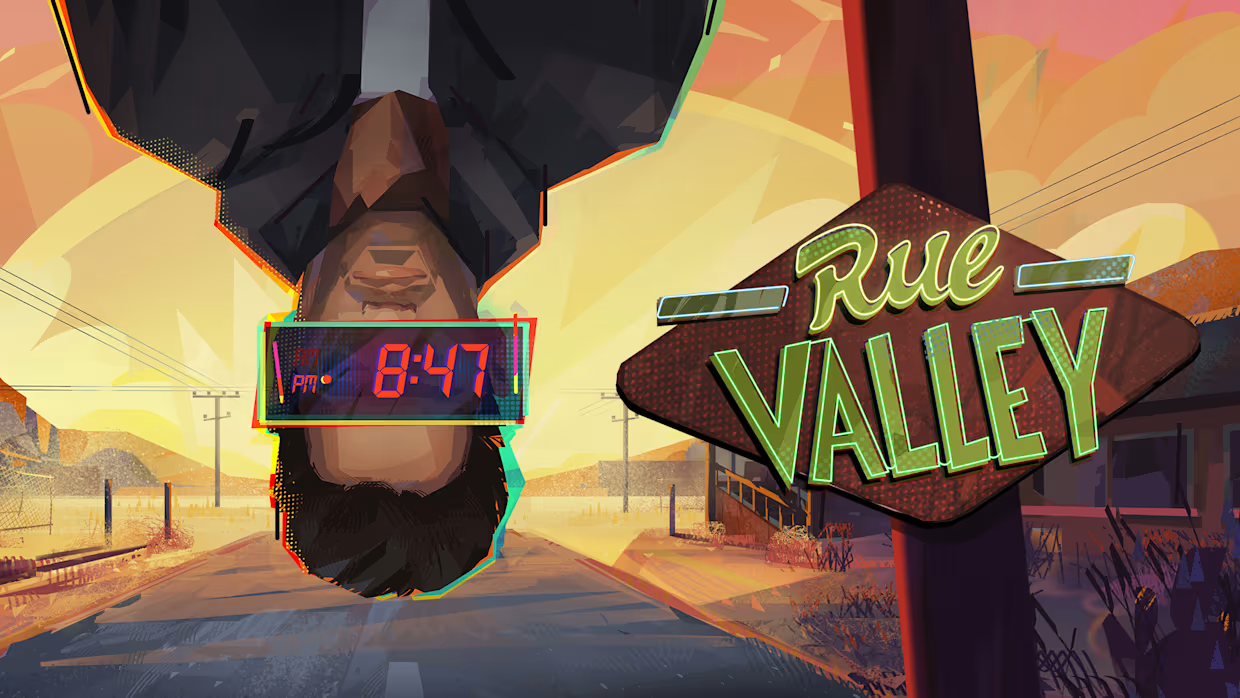

8:00 pm: Eugene Harrow has just finished his first therapy session with Dr. Fink. That’s one out of (likely) many, and so he sets up shop in the motel next door; the only one in the small town of Rue Valley. After checking in, he heads to his room. When the clock reads 8:47 pm, he experiences something that’s out of a doomsday scenario: the skies are set ablaze, and the whole world blacks out.


Just then, Eugene finds himself back in Dr. Fink’s office, with the clock reading 8:00 pm. While this could have been brushed off as a vivid dream, our protagonist quickly finds out that he is in a Groundhog Day-type situation. Every night, at 8:47 pm, the day ends up the same dramatic way, only for it to reset back to 8:00 pm.
What is the reason for this occurrence, and how can Eugene get out of this loop? That’s for you to find out in Rue Valley.
An isometric RPG with a comic book flair
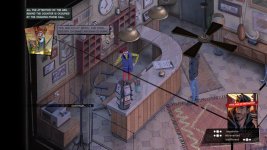
With its isometric perspective and having received praise from Disco Elysium leads, Rue Valley has been looped in as Disco-like. It plays like one, with a point-and-click gameplay that has been well optimised for controllers, especially with the ability to highlight interactive elements with the shoulder buttons. Despite these similarities, Rue Valley stands on its own thanks to its original artistic direction and contemporary setting.
Its 2D parallax art style leans heavily into a comic book aesthetic. From its fonts and panel-style text to its stylised palette and stop motion-like animations, it draws more visual parallels with comic books than cRPGs. This does help it pack its own flair, without necessitating comparisons with other isometric RPGs.
The presentation is enhanced with professional voice-overs. This is a bonus with a game as text-heavy as this one, helping break the monotony and easing newcomers to the genre.





However, there are some inconsistencies with the VO. Even within the same conversation, some lines are recorded, while others aren’t. The game would also have benefited from having voice acting for Eugene’s internal monologue, which is more than frequent in this game.
There is also a lack of character animation during conversations. This is especially noticeable during long stretches of conversations, which this game isn't lacking. These rough edges don’t necessarily ruin the experience, but they do make extended dialogues feel longer.
That said, the strength lies in the story and character development. There is more than meets the eye in the seemingly quaint town of Rue Valley. Beyond Eugene’s need for therapy, the town’s inhabitants are dealing with their own stuff, and you get to dig deeper as you interact with them throughout the game. You learn how each character is interconnected, and get to experience relatable family squabbles to heartwarming moments.
There is an overarching theme of mental health that underpins the main plot and the story of each character. The ‘small town secret’ premise and the element of having small decisions accumulate into meaningful results are apt to explore such themes.



A loop with purpose
The premise of a looping cycle might not sound appealing at first, with the inevitable repetition that it implies. Rue Valley earns its keep by employing this loop to its strength, using it as a clever pacing device that builds urgency and adds meaning to your investigative leads of choice.
As the town’s inhabitants are engaged in the same activities across every loop, events are time-based. Some NPCs will be in different locations based on the time of day, and may act differently at different times. As there is only so much Eugene can do within the 8:00-8:47 pm window of a single loop, this forces you to pursue different leads and experiment with your investigative approach once the day resets.
While each day will feel familiar, they will feel fresh as more options open up from talking to other people to accessing new areas. The timed mechanic also helps draw you back into the game. As the clock reaches 8:47 pm, you might not finish all of your leads, so you'll be motivated to pursue them in the next loop.
Nevertheless, some aspects of the loop do get excessively repetitive, like waking up in Dr Fink’s office and even leads that require backtracking across multiple loops. You do unlock some shortcuts to areas you need to visit, which does help, but there are recurring elements that you have to contend with.
Mind power
As Eugene investigates the mysterious loop in a bid to get out of it, his main tool is his mind. Having mental health struggles recently, he might not be at his sharpest, but slowly progressing across loops does help build his confidence and his mental acuity. This is where Rue Valley’s investigative mechanic comes in.
This game doesn’t rely on combat but, rather, on Eugene’s investigative skills. His approach is determined by his personality traits (which you build when starting the game) and his mood. The mood or status effect varies through the game based on your in-game actions and decisions, and different moods can alter Eugene’s base personality, leading to new investigative routes.
This is the game's version of 'skill checks', leading to different conversation outcomes and paths to investigate. If you are too cynical, for example, you might be blocked from a truthful response in a conversation. However, there is an element of smoke and mirrors with this mechanic, as, unlike other isometric RPGs, you are not able to pursue any options you fancy from the get-go. The game purposefully restricts your options, especially at the start, which can feel deceiving.


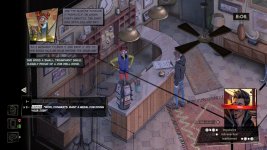
Another mechanic that ties into Eugene’s investigation is the Mind Map. This helps you recall events of the day and facts that you learn about people in town. The Mind Map turns these fragments of information into ideas, and with enough inspiration and willpower points, you can turn that idea into an intention.
By following through on intentions (or investigative leads), you will have access to new dialogue options that will lead you through the journey of completing that intention. However, not all that you intend can be successfully achieved, adding a layer of challenge to your quest.



Rue Valley: a time-loop story with intention
Despite the repetition by design, Rue Vallley, for the most part, mitigates tedium with variety. The new investigative paths that open up by following new intentions reward persistence.
However, it falls short compared to the iconic cRPGs it draws influence from. This is due to the game often railroading you on specific tracks, without offering the freedom to explore other routes that have become quasi-expected of games of this genre. There is also a lack of variety in side quests, and in-game choices aren’t as nuanced.
Rue Valley might be best not compared to the likes of Disco Elysium, and it does stand on its own. Its exploration of mental health thematically and mechanically is intriguing and refreshing, but does not ultimately reach the heights that its predecessors set. Nevertheless, it is a notable accomplishment as Emotion Spark Studio’s debut game, and I hope they improve on their formula in their next game.
Recommended Comments