
“My games are concepts and feelings that I can't describe in words,” solo developer Sam Eng said in a 2024 interview for Chanel, after winning the brand’s prestigious Next Prize. “Everything I encounter, I try to portray in a gameplay or audio-visual experience.”
These quotes give a taste of how Skate Story has been designed. It’s driven by an artistic impulse that tempts me to say ‘It won’t be for everyone’ (here I’m thinking of the offbeat narrative that ends in an abstract sequence a little like the finale of 2001: A Space Odyssey), but I hesitate. It’s clear that Sam Eng is having fun and not taking himself too seriously, and I truly enjoyed my playthrough.
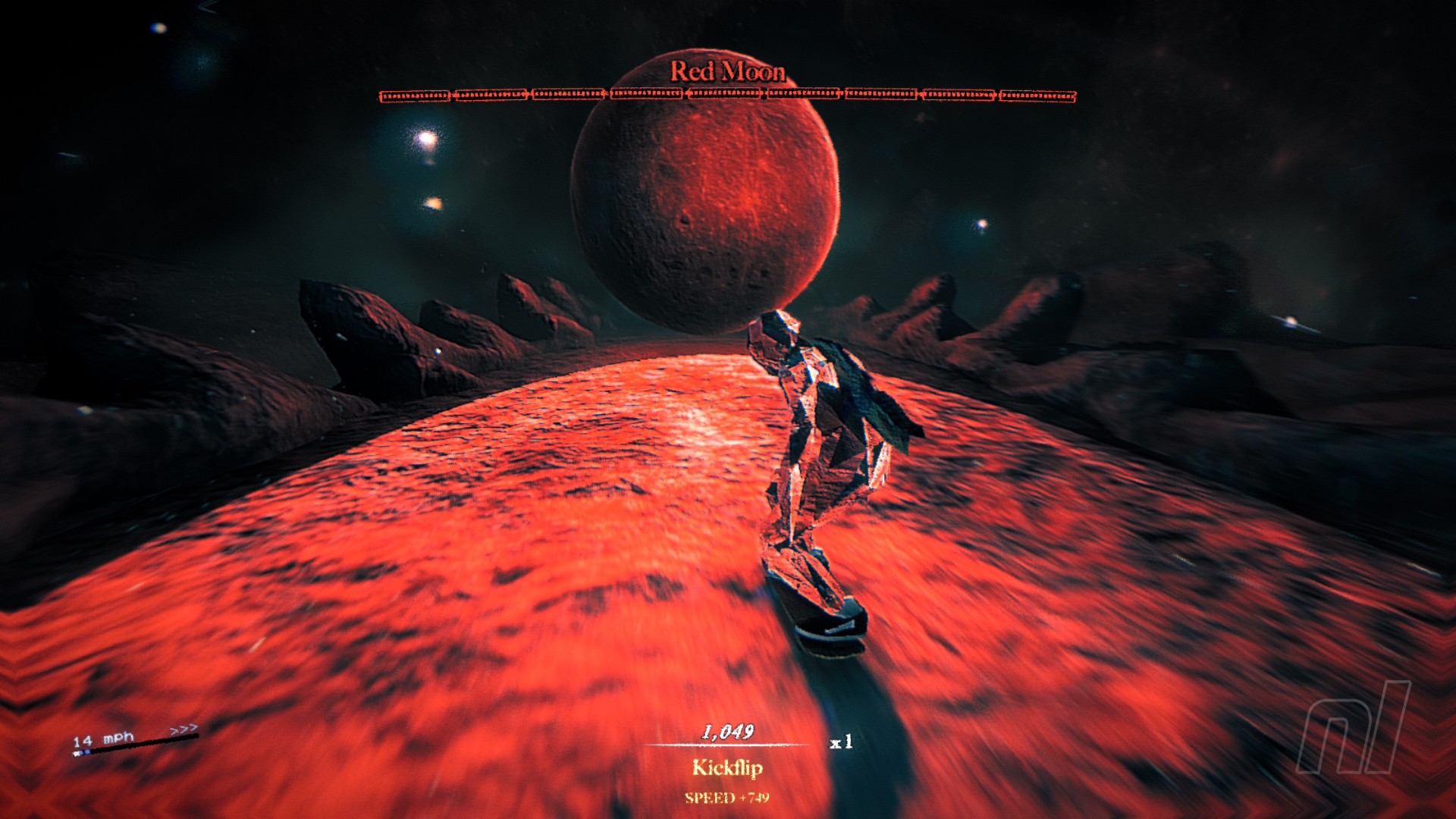
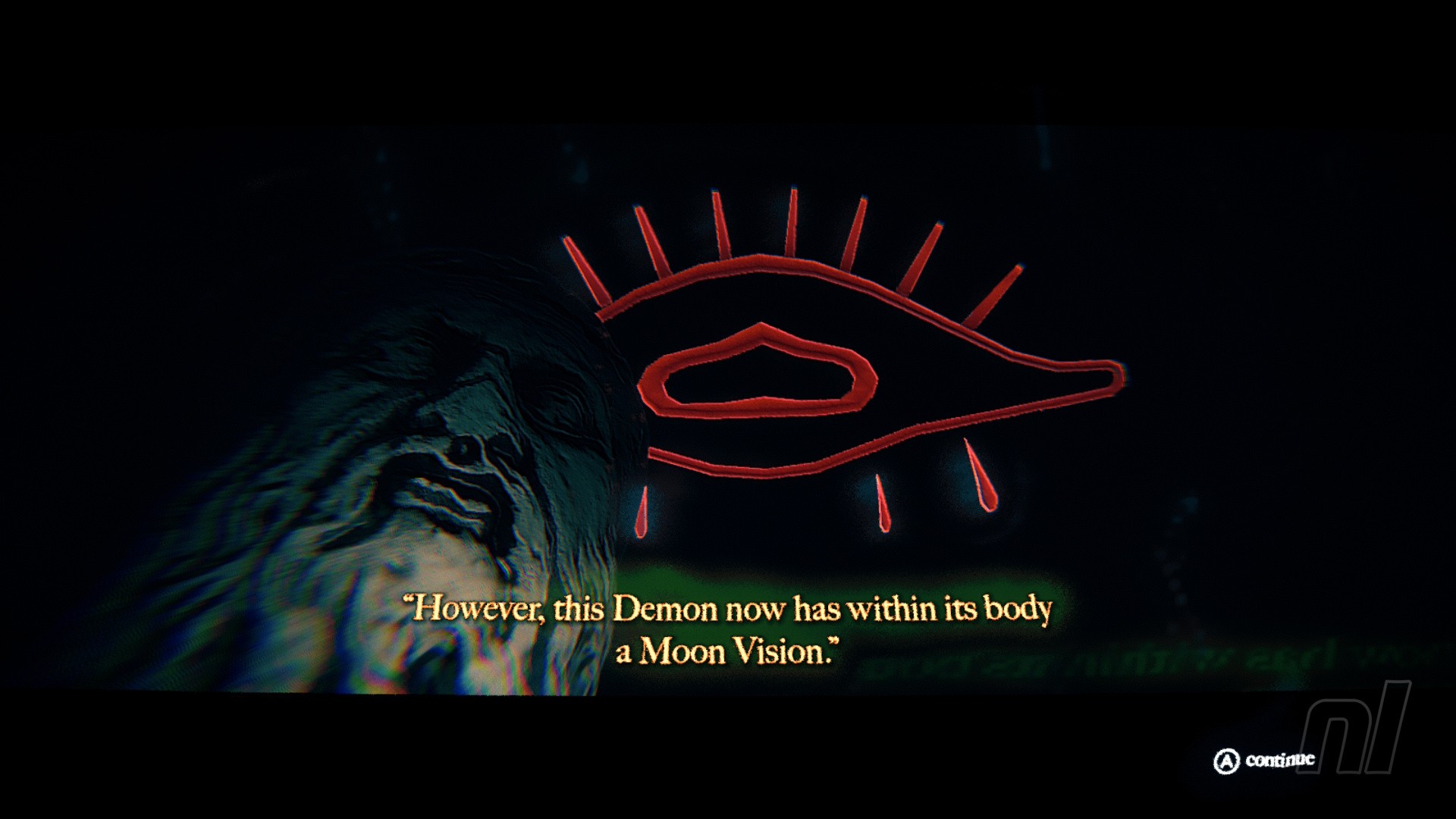
You take on the role of a demon kept awake in the underworld by the bright light of a moon. To fix this problem — and also to satisfy your hunger — you decide to eat the moon. This in turn leads to signing a contract with the devil to obtain a skateboard, all so you can reach the moon faster. And next, as you explore the underworld, you’re drawn into side quests to meet the whims of some offbeat characters - rabbits, frogs, skulls, a disembodied philosopher head, even a talking pillow creature.
Captured on Nintendo Switch 2 (Handheld/Undocked)
Many of the fetch quests and other demands reminded me of the overworld busywork of No More Heroes (an impression helped by some similar sound cues) – but with a much more laid-back energy.
Over roughly seven hours and nine different chapters, you test your skating skills to stop gas seeping from drains, to clean up obelisks so a giant rubbish bag can be taken out, to locate and dry the devil’s washing, and much more besides. You might have to collect letters for a pigeon distractedly finishing up a screenplay, or find and repair a gemstone for a demonic penguin. The action takes part in an afterlife decked out with laundrettes, subways, cafés, and surreal houses. It all sounds odd, but it works.
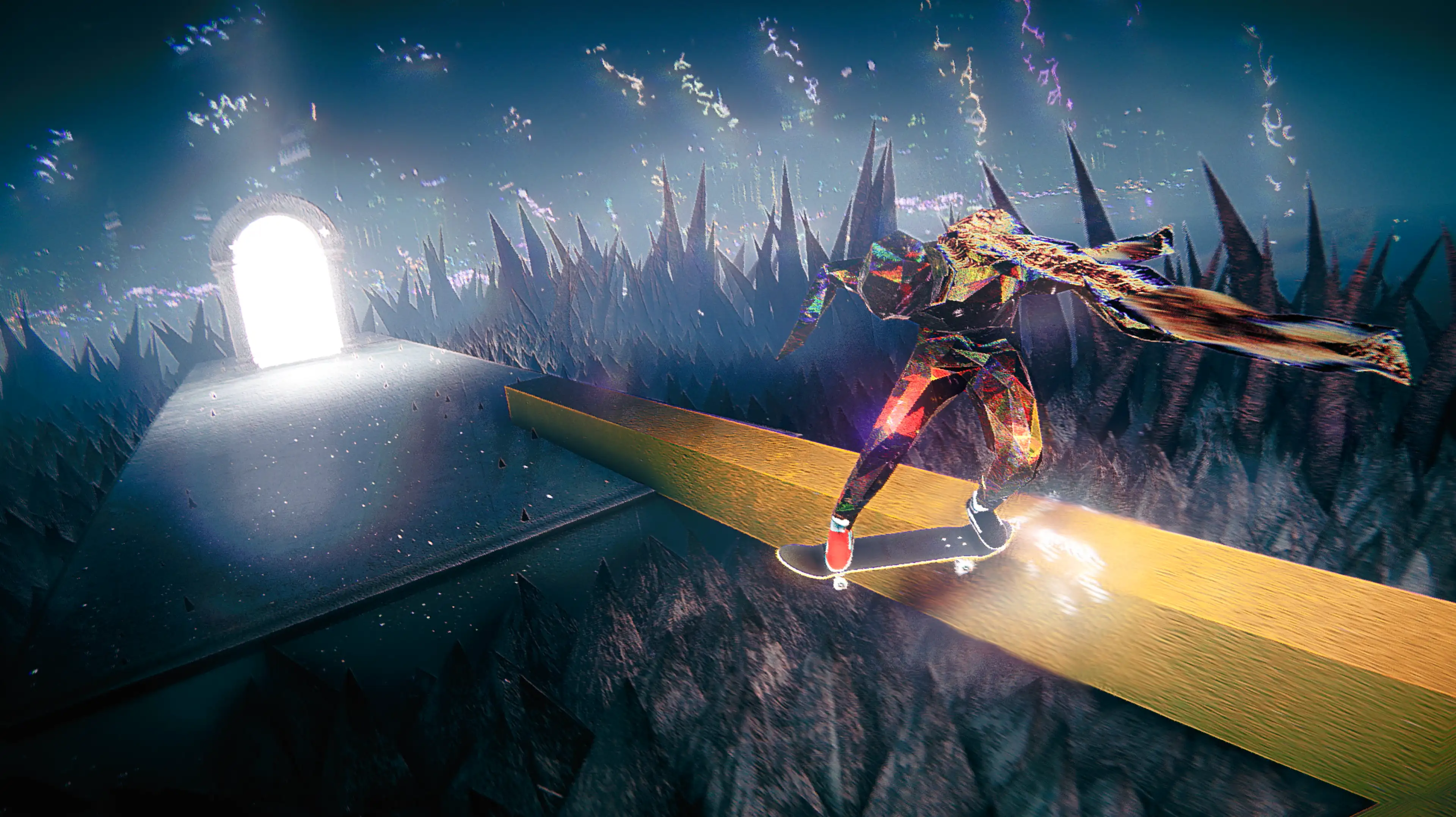
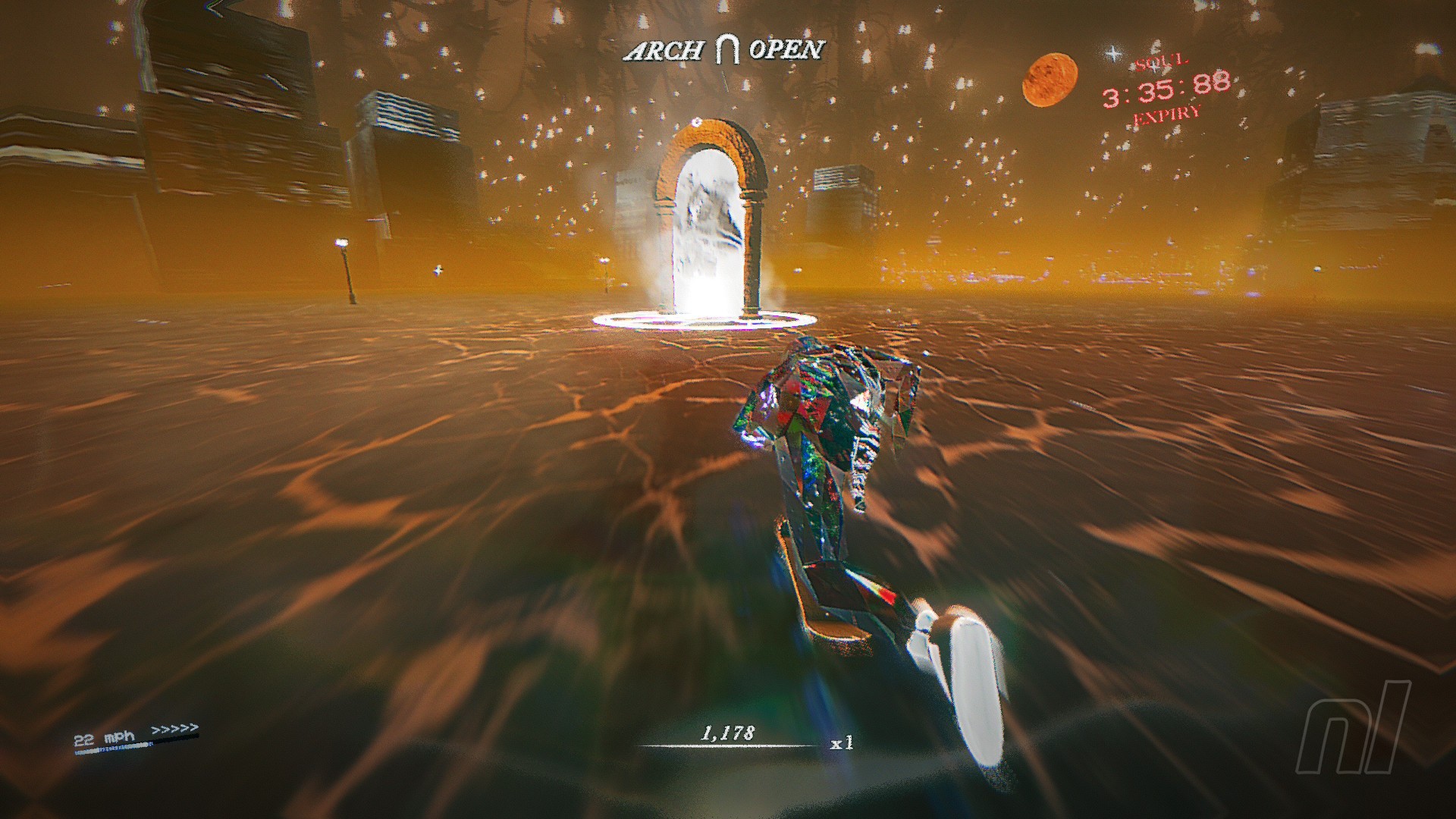
These tasks frequently escalate into challenges where you have to perform a certain sequence of moves, or battle moons and ‘fuss’ (underworld anti-skating authorities) by performing and chaining tricks and grinds. The gameplay variety is rounded out by kinetic skate courses – routes you navigate through combinations of grinds, slides, ollies, and more, avoiding lips and risky gaps to prevent crashing and shattering into pieces while racing toward supernatural archways.
Captured on Nintendo Switch 2 (Handheld/Undocked)
Timers and other challenges add urgency, but Skate Story is rarely difficult. Instead, the real draw lies in the overall presentation. Eng — who made the game over six years — has spoken of his desire to capture the feeling of night-time skating through New York, his home, while listening to synth-wave music. To achieve this, he’s collaborated with musicians Blood Cultures, and he pretty much nails his intentions.
Combined with the low-fi crystalline visual style and an expertly crafted feel to the skating itself — complete with a convincingly shaky ‘skate video’ camera — there are passages of Skate Story that are delightful to play through. You feel as if it’s you out there landing tricks, letting loose, enjoying music with the glittering lights of a strange underworld surrounding you.
And I’ll go further with my praise: the climax features an extended sequence with audiovisual ambition that I’ve not seen anywhere else. One ‘boss’ section, with pumping drums, and some visual touches I won’t spoil, will go down as one of my favourite video game moments in years. It’s the kind of idiosyncratic experience that likely only ever happens with solo developers. There were a few other surprises too, but — yes — I've already revealed too much.
Captured on Nintendo Switch 2 (Docked)
It's also true to say that I’ve never seen a game with a graphical style quite like Skate Story’s. One frustration is that the glass-like nature of the protagonist and the appealing lo-fi fuzz are difficult to do justice in still images. The characters and buildings give a thrifty sense of making the most out of the materials at hand, but the overall design is so memorable and the animations — especially while skating — are so strong that any visual limitations have been turned into strengths. In motion it looks lovely, full of ambient spectral mist and cinematic ambition.
But…and there is a small 'but'. My only real complaint is that, once I reached the final credits, I felt the skating could have been pushed a little further. The final section is the best part of the game, but it also represents the only moment of real challenge. Despite the authentic-feeling skating, I was never really forced to master much more than chaining a few tricks together.
Really, though, I’m nitpicking. I was just left wanting more of the really good stuff. Ultimately, Sam Eng has achieved something very strong with Skate Story. Performance is excellent on the Switch 2, both handheld and docked – although I gravitated toward the ‘performance’ mode over ‘quality’. The smooth frame rate suits the gameplay, and the low-fi presentation makes any reduction in fidelity unnoticeable unless you compare images side by side. Even then, the difference is marginal.
Conclusion
There are moments of gameplay during the climax of Skate Story that are some of the most visceral, original, and downright impressive that I’ve experienced for a very long time. Its great-feeling skating isn’t always pushed to its limits, but the sheer craft, personality, and audiovisual flair throughout largely compensate.
Overall, Skate Story is an enjoyable, offbeat adventure game with a striking, unique identity. It might not be difficult, but if its tone speaks to you, you’ll find plenty to appreciate for its relatively short duration: sliding at speed around corners, landing shove-its, jumping across crevices, grinding through crystalline underworlds, and, yes, eating moons – all to a superb soundtrack.
Recommended Comments