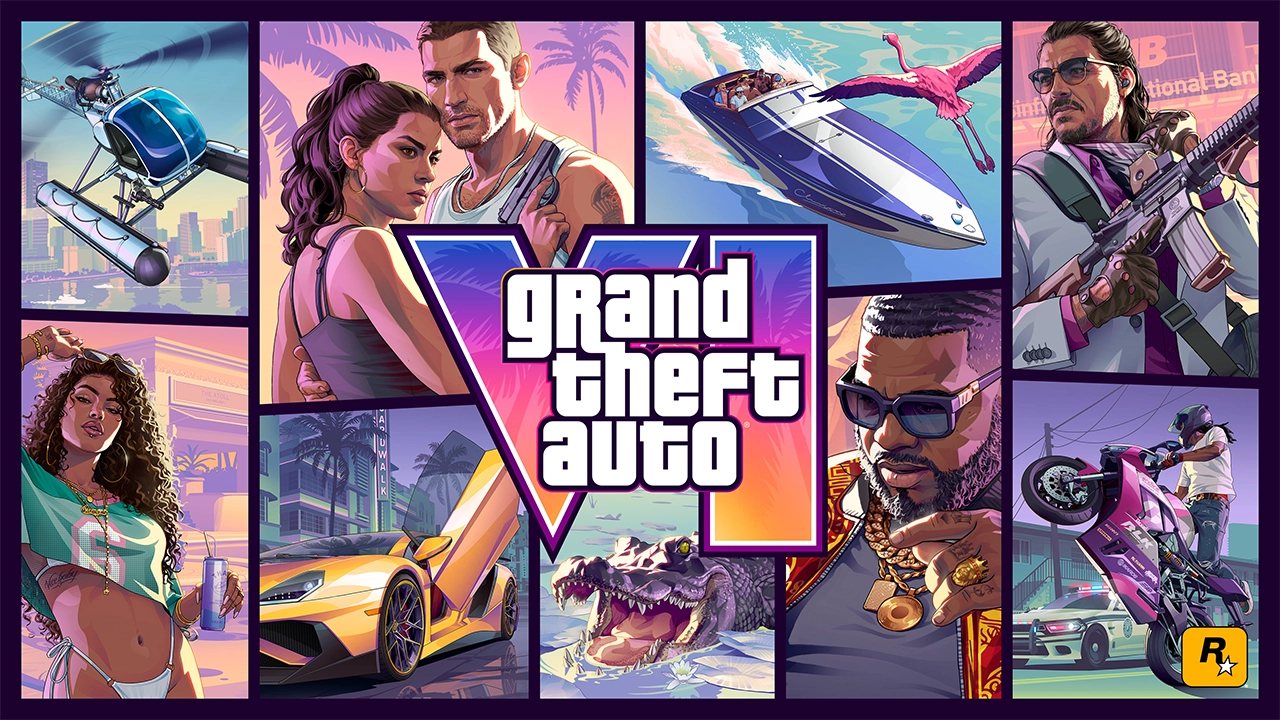

Grand Theft Auto VI pre-orders finally went live on Thursday, June 25th, after years of waiting, wishlisting, and speculation. By most measures, it was a triumphant moment for Rockstar Games and parent company Take-Two Interactive: millions of fans rushed to lock in their copies across PlayStation, Xbox, and major retailers ahead of the game's November 19th launch.
Wall Street's response, though, was more complicated than the fan reaction. Take-Two's stock actually dropped about 2% at market open on both Wednesday and Thursday — a strange wrinkle for a game some analysts expect to become the biggest entertainment launch in history.
Why the Stock Dipped Despite the Hype
The dip doesn't mean investors have soured on GTA VI. If anything, the broader analyst consensus remains bullish. The disconnect seems to come down to pricing and missing information rather than any real doubt about demand.
Some investors had been hoping for a $100 base price, betting that Take-Two could push the industry's price ceiling higher. Instead, Rockstar confirmed a standard price of $79.99, with a $99.99 Ultimate Edition offering cosmetic extras like premium vehicles, weapons, and apparel — no physical collector's edition, and notably, no disc in physical copies at all, just a code in a box.
Bank of America was reportedly among the loudest voices hoping for that $80 price point, and got its wish. Meanwhile, analyst Omar Dessouky reiterated a buy rating on Take-Two stock and raised his price target from $320 to $368, largely because of confidence that Take-Two can better monetize GTA Online's subscription service, GTA+, once GTA VI launches.
The other sore spot for some investors: Rockstar's pre-order rollout included no mention whatsoever of a GTA Online mode for the new game. That silence has left some shareholders uneasy, even though an online mode is almost certainly coming at some point — Rockstar has simply chosen not to discuss it yet during the single-player-focused marketing push.
The Real Investor Thesis: GTA Online, Not Just GTA VI
What's becoming clear from the analyst chatter is that Wall Street isn't just betting on GTA VI as a one-time blockbuster sale. The bigger story is what happens after launch.
BTIG analyst Clark Lampen described GTA VI as a game expected to "catalyze a sustainable, multi-year improvement in earnings power" stretching from fiscal year 2027 through 2029. BTIG issued a $290 price target on Take-Two stock with a buy rating, pointing to historical data suggesting per-capita spending in GTA Online could reach $40 to $45 per player — above the bank's earlier base-case estimate of $30 to $40 across a game's first five years.
Bank of America's Dessouky made an even bolder comparison, suggesting the next iteration of GTA Online should monetize "at least as well as Fortnite." That's a significant claim, since BofA's own analysis suggests the current version of GTA Online already monetizes below live-service heavyweights like Fortnite, Call of Duty, and EA Sports FC Ultimate Team. The bank's reasoning is that Rockstar will enter this next cycle with a vastly larger player base, more live-service experience, and a stronger content pipeline than it had when GTA Online first launched back in 2013.
There's also a structural difference analysts are watching closely. Fortnite has built its entire business model around cosmetic-only purchases — skins, outfits, and similar items that don't affect gameplay. GTA Online, by contrast, leans more heavily on "pay-to-progress" mechanics, giving players more direct incentives to spend if the in-game economy is designed well. BofA lifted its fiscal 2028 bookings forecast for GTA Online by roughly $900 million, to $2.2 billion, on the strength of that thesis.

The Risk: Monetizing Without Alienating Players
None of this is a guaranteed win for Take-Two. The tension at the center of the bull case is the same one that's haunted live-service games for years: players tend to tolerate spending when it feels optional or cosmetic, but they push back hard when an economy feels exploitative or aggressively pay-to-win.
That balance will likely define whether GTA Online becomes the long-term financial engine Wall Street is betting on, or whether Rockstar plays it too safe — or too aggressively — and leaves money on the table either way. Competition is also fiercer than it was in 2013; Fortnite, Roblox, Call of Duty, and major sports titles have already trained a generation of players to spend consistently inside live-service ecosystems, which cuts both ways. It raises the ceiling on what's possible, but it also raises player expectations for value.
The other lingering risk, as always with Rockstar, is timing. GTA VI has already been delayed multiple times before settling on its November 19th, 2026 release date, and a chunk of the current investor optimism is weighted toward fiscal 2027 and 2028 performance. Any further slip could rattle the more aggressive price targets currently floating around.
What This Means for Players
For now, fans navigating the pre-order process should know a few practical details: PlayStation charges immediately upon pre-order despite the November release date, while Xbox waits until roughly 10 days before launch, and Amazon doesn't charge until the order ships. There's no real urgency to pre-order this early — the game isn't expected to sell out, and waiting until closer to launch still secures any pre-order bonuses and pre-load access.
The bigger picture, though, is that Wall Street's muted stock reaction isn't a referendum on GTA VI's commercial prospects — it's a signal that the more interesting financial story is just getting started. Investors increasingly see the game itself as the entry point into a much longer, recurring-revenue relationship with GTA Online. Whether Rockstar pulls that off without souring the goodwill of tens of millions of new players is the real question the next few years will answer.
Recommended Comments