




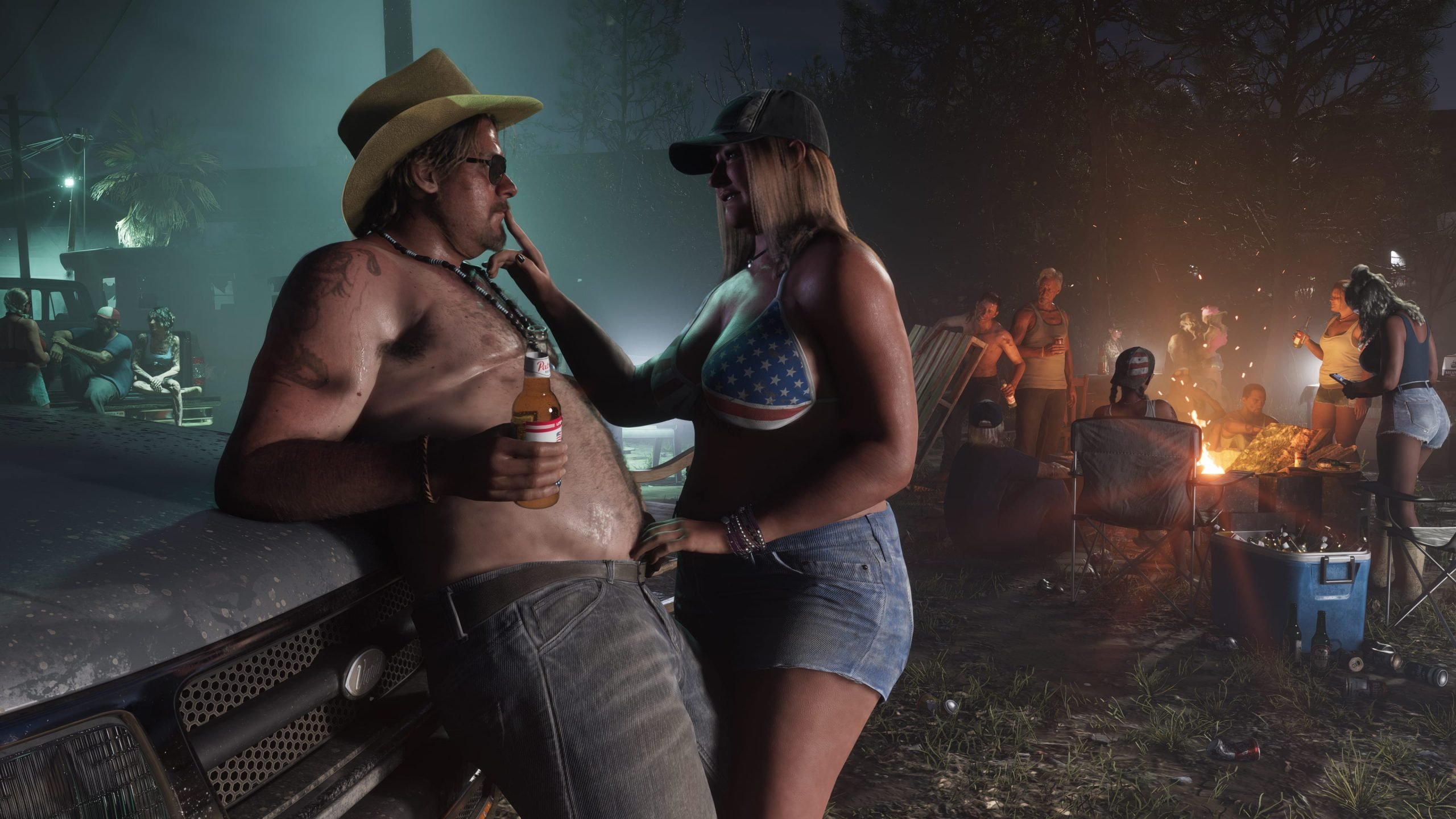

In the ever-heating debate over artificial intelligence’s role in video game development, two of the biggest names in tech and gaming have clashed head-on. Elon Musk, the world’s richest man and CEO of xAI, Tesla, and SpaceX, has suggested that advanced AI could let players generate their own version of Grand Theft Auto VI (GTA 6) in minutes—potentially before Rockstar Games even releases the official title. Strauss Zelnick, CEO of Take-Two Interactive (Rockstar’s parent company), responded sharply this week, essentially asking: If AI is poised to replace creative jobs, why hasn’t it started with Musk himself?
The exchange highlights a growing tension in the industry: Can generative AI truly replicate the human creativity, storytelling, and polish that define blockbuster games like GTA 6? Or is it just a flashy tool that falls short of the magic Rockstar is known for?
Musk’s Bold Prediction: AI as the Ultimate Game Creator
The spark came earlier this year, in January 2026. Musk responded “Yeah” to a tweet suggesting there’s a “non-zero chance” that AI could let users “generate your own GTA 6 in a few minutes” before the real game launches. He doubled down, tweeting: “You won’t even have to ask. AI will figure what video game you’d like best.”
Musk’s vision aligns with his broader enthusiasm for AI through xAI, which has promised to release a “great AI-generated game” before the end of 2026. He and others in the AI space see a future where text-to-game technology evolves from current text-to-image and text-to-video tools, allowing instant, personalized entertainment on demand.
Critics, however, point out Musk’s track record of ambitious predictions that haven’t always materialized—like fully autonomous Tesla summoning by 2018 or a crewed Mars mission within a decade of his 2011 claim. Supporters argue his track record in scaling complex tech still makes his AI optimism worth taking seriously.
Zelnick’s Sharp Rebuttal: AI Won’t Replace Rockstar’s Human Touch

Speaking at the Semafor World Economy 2026 forum last week, Zelnick directly addressed Musk’s comments while discussing AI’s impact on employment and creativity. He didn’t mince words:
“If AI were going to get rid of employment, the richest man on earth, Elon Musk, knows a little something about AI last time I checked. He has unlimited financial resources and he has unlimited human resources and he has apparently an unlimited number of ideas. He knows his way around AI. The man works 20 hours a day. Like, if AI were to take anyone’s job, wouldn’t it take his job? Like the richest guy on earth. Wouldn’t that be like job number one for AI to take? Why is he so busy?”
Zelnick went further, adding a pointed jab: “I mean, in fairness, if you were going to choose a person who were a simulation, like he (Elon Musk) would be my number one choice.”
The Take-Two CEO emphasized that AI is a useful tool—one his company already uses—but not a replacement for the “creative genius” behind hits like GTA. He has previously stated that while AI can generate impressive graphics, it can’t “put it all together and create a massive hit.” Rockstar’s games succeed because of human-driven narrative, world-building, and attention to detail—elements Zelnick believes AI, trained on existing data (sometimes controversially), simply cannot replicate at the same quality.
The Bigger Picture: AI’s Role in Gaming and GTA 6’s Horizon
GTA 6 remains one of the most anticipated games of the decade, with a reported release window now pointing toward November 19, 2026, following delays. The first trailer in 2023 broke records, and fans have been dissecting every rumor since. Rockstar has a reputation for painstaking, human-led development—think massive open worlds, satirical storytelling, and immersive details that have defined the series for over two decades.
The Musk-Zelnick exchange underscores a wider industry conversation. Pro-AI voices see generative tools democratizing game creation, potentially letting indie creators or even players bypass traditional studios. Skeptics, including many developers, worry about job displacement, quality dilution, and ethical issues like training models on “stolen” art and data.
Zelnick’s stance aligns with many veteran game leaders who view AI as an enhancer for tasks like asset creation or testing, not a full substitute for the collaborative human process that makes games culturally significant.
What This Means Moving Forward
Musk’s optimism reflects the rapid pace of AI advancement—tools like Grok (from his own xAI) are already pushing boundaries in content generation. Yet Zelnick’s response serves as a reality check from the trenches of AAA game publishing: Scale, polish, and emotional resonance still come from people, not prompts.
As GTA 6 edges closer to launch, the debate will only intensify. Will AI accelerate development for future titles? Absolutely. Will it “make GTA 6” before Rockstar does? Zelnick—and millions of fans craving Rockstar’s signature touch—seem convinced the answer is no.
For now, the ball is in Rockstar’s court. With Take-Two betting big on human creativity, gamers will soon find out whether the wait for GTA 6 was worth every painstaking, non-AI-generated second. One thing’s certain: The conversation about AI’s place in gaming is just getting started—and it’s already more entertaining than most procedurally generated content.
Recommended Comments